
People who have just moved to North America will always see the UL mark on product nameplates when buying electrical appliances; cross-border e-commerce sellers are also often required to provide UL certification by platforms such as Amazon and Walmart. Many people’s impression of it is either “it’s a mandatory official US certification, so products with it are absolutely safe”, or “it’s just a marketing concept hyped by merchants, useless” — in fact, neither statement is correct. UL is a safety certification system that has been in operation for more than a hundred years. It has clear practical functions as well as clear boundaries. Understanding it can help you avoid many safety risks and also avoid being fooled by merchants’ promotional rhetoric.
1. What is UL Safety Certification: First Understand Its True Identity
Many people’s misunderstanding of UL essentially comes from not understanding what it “is”. Let’s first explain its identity in plain language.
UL’s full name is Underwriters Laboratories, often translated as 美国保险商实验室 in Chinese. It first emerged in the United States at the end of the 19th century. At that time, the insurance industry faced more and more electrical fires, found that there was no unified safety standard, and suffered huge losses, so it took the lead in establishing an institution dedicated to product safety testing. Today, UL’s certification services are mainly provided by related entities such as UL Solutions. It is neither a US government department nor can it be simply summarized as a “non-profit organization” — its core positioning is an independent third-party safety science and certification service institution, which endorses product safety by formulating safety standards, testing products, and tracking factory production.
Here we need to mention a concept that many people have heard of but don’t understand: OSHA NRTL. OSHA is the Occupational Safety and Health Administration of the United States, and the full name of NRTL is “Nationally Recognized Testing Laboratory”. In plain terms, it is “a third-party institution officially recognized by the US government and qualified to conduct safety certification for specific products”. UL is one of the first batch of institutions to obtain NRTL qualification, which is also one of the core reasons why its certification is widely recognized in North America.
Another point that is most easily misunderstood: the object of UL certification is specific product models, key components, materials or specific uses, not the entire company, nor all products of the entire brand. For example, if a certain hair dryer of a brand has passed UL certification, it does not mean that all hair dryers and all home appliances of this brand have UL certification; it must correspond model by model.
What Does UL Prove and What Does It Not Prove?
Many people think that UL certification is proof of “good quality”, but in fact its boundaries are very clear.
UL certification mainly proves three things: First, the submitted product samples have been evaluated in accordance with the corresponding safety standards, focusing on risks that directly threaten personal safety such as electric shock, fire, overheating, mechanical injury, and structural failure; Second, the mass production process is subject to UL’s Follow-Up Service, and factories must produce in accordance with the approved structure, materials and processes, and cannot use qualified samples for submission but cut corners in mass production; Third, the scope of certification is clear, and complete machines, components, materials, and specific performances cannot be confused.
Take the most intuitive example: two hair dryers that have both passed UL Listed certification have the same safety baseline — neither will easily leak electricity, catch fire, or overheat and burn people. But UL does not care about performance unrelated to safety, such as air volume, noise level, service life, hand feel, and workmanship fineness. It is normal for their prices to differ by several times.
Conversely, what UL certification does not prove is also clear:
- It does not prove that the product has top quality, the longest service life, or the best performance. It is only a “pass line” for safety, not a “certificate of merit for top students”;
- It does not prove global universal applicability. UL is mainly highly recognized in the North American market, and other regions such as Europe and Asia have their own access requirements;
- It does not prove that one certification is valid for life. Product redesign, replacement of key components, factory changes, safety standard updates, or unqualified factory follow-up inspections may all invalidate the certification;
- It does not prove that all accessories in a set of products have passed certification. The main unit, power adapter, battery pack, and power cord may need to be verified separately.
Is UL a “Mandatory Certification”? Don’t Just Look at the Law
Many people struggle with “whether UL is mandatory”, and this question cannot be answered with a simple “yes” or “no”.
At the US federal level, most consumer goods do not have a unified mandatory requirement for UL certification, but this does not mean that UL is dispensable. Here we need to introduce an important concept: AHJ, the full name is Authority Having Jurisdiction, which is the “authority responsible for acceptance inspection” — it may be a local electrical inspector, fire department, building acceptance party, or it may be a school dormitory management office, property management company, or insurance company. In short, it is the party that has the final say in a certain scenario.
What really makes UL a “de facto access requirement” is not federal law, but these specific scenarios: e-commerce and offline retail channels such as Amazon and Walmart will require high-risk categories to provide UL or equivalent NRTL certification; building codes will require fixed-installation electrical equipment and fire protection products to have NRTL certification; commercial kitchens, offices, school dormitories, and rental properties will prohibit the use of high-risk electrical appliances without NRTL marks; insurance companies may also take certification as one of the prerequisites for claim settlement.
So to judge whether UL is needed, don’t just ask “is it mandatory by law”, but ask four questions at the same time: Which channel do you sell/buy through? What scenario is it used in? Does the local acceptance authority recognize it? Is there a requirement in the insurance policy?
4 Common Cognitive Pitfalls for Beginners
People who are new to UL almost always fall into these misunderstandings, let’s clarify them in advance:
- Having a UL mark = best quality: Wrong. UL only checks the safety baseline, and has no direct relationship with performance, service life, or user experience;
- UL is a mandatory US government certification: Wrong. UL is a third-party institution. In most scenarios, it is required by channels, regulations, insurance or acceptance authorities, not a unified federal mandate;
- UL written on packaging = complete machine has passed certification: Wrong. It may only be that a certain component has recognition, the material has reached UL grade, or even just vague publicity. Be sure to check the traceable information on the product itself;
- One certification is valid forever: Wrong. Product redesign, component replacement, factory problems, standard updates, and certification suspension or revocation will all invalidate the certification.
2. Why is UL Worth Paying Attention To? It’s Relevant to Everyone
After understanding UL’s identity, you may ask: since it is not mandatory by the government, why does everyone care so much about UL whether they are buying or selling things? In fact, it is directly related to the vital interests of different groups of people.
Practical Functions for Ordinary Consumers
The most direct function is to help you filter out those obviously high-risk inferior electrical appliances. Low-priced electrical appliances without safety certification may save you ten or twenty dollars, but once electric shock, fire, overheating or explosion occurs, the consequences will be unimaginable. UL’s testing and factory tracking mechanism can at least ensure that products meet the most basic safety threshold.
Secondly, in many scenarios in North America, having NRTL certification is a mandatory requirement: for example, school dormitories may check whether electric blankets and heaters have UL or equivalent marks, and if they are found not to have them, they will be confiscated; landlords of rental houses may require tenants to use certified electrical appliances; fixed electrical appliances in commercial kitchens, laboratories, and offices may not pass fire or safety inspections without certification.
Another point that many people ignore: if an electrical accident does occur, products with valid certification, correct installation, and compliant use will be more favorable in liability determination and insurance claim settlement — of course, whether the claim can be paid ultimately depends on the policy terms and the cause of the accident, but at least you don’t have to bear the responsibility of “using unqualified products”.
If you are not sure whether to check for UL when buying things, prioritize these categories: products that are powered on for a long time, products that generate heat, products with lithium batteries or energy storage, high-power products, fixed-installation products, and electrical products commonly used by the elderly and children — these have a higher probability of accidents.
Practical Value for Cross-Border Sellers/Brands
For sellers operating in the North American market, UL certification is first and foremost a stepping stone for channel access: platforms such as Amazon and Walmart require sellers to provide UL or equivalent NRTL certificates for high-risk categories such as power supplies, batteries, home appliances, lamps, and power strips, otherwise the products will be directly removed from the shelves, or even not allowed to be listed at all.
Secondly, it can help you reduce many risks: such as recalls, consumer complaints, product liability claims caused by safety issues, and the risk of commercial insurance refusal. Especially for high-risk categories, once a safety accident occurs, the claim amount may directly overwhelm a small company.
In addition, UL has a high awareness among North American consumers. Products with the UL Listed mark have significantly higher user trust, especially in categories where users naturally care about safety, such as electrical appliances, power supplies, and lamps.
Of course, there is no need to blindly certify the entire product line. A more reasonable strategy is to prioritize complete machine certification for main models that are “high-risk + high-sales + clearly required by channels”, and for low-risk products and products not sold through North American channels, you can evaluate whether to do certification according to actual needs.
Why is UL Particularly Recognized in the North American Market?
They are all third-party certifications, why is UL’s position so stable in North America? There are four main reasons:
First, it has deep historical accumulation. UL’s standards and testing system have been developed for more than a hundred years, and are deeply integrated into North America’s construction, electrical, fire protection, insurance and retail systems. Many regulations themselves are formulated with reference to UL standards;
Second, it has the official endorsement of the NRTL system. Certificates issued by OSHA-recognized laboratories such as UL, ETL, and CSA have clear legal validity;
Third, it is the long-term habit of AHJs and channels. Electrical inspectors, property management companies, and purchasers in many places only recognize common NRTL marks such as UL, ETL, and CSA when checking safety, without additional explanation;
Fourth, user awareness is strong. When ordinary North American consumers buy electrical appliances, they will think “the safety of this product has been verified” when they see UL Listed, which has become a consumption habit.
Can Products Without UL Certification Be Used or Sold?
This question depends on the scenario:
- Personal use: It does not mean it is illegal, but if high-risk electrical products do not have NRTL certification, the safety risk and subsequent liability risk will be much higher. It is not recommended to save this little money;
- Commercial/public places: Fixed electrical equipment, fire-related products, building wiring products, commercial kitchen equipment, etc., are almost always required to have NRTL certification, otherwise they cannot pass acceptance inspection, and the liability will be great if problems occur;
- Seller side: If the platform or purchaser explicitly requires the provision of UL or equivalent NRTL certificates, without them you will face the risk of product removal, audit failure, return and claim.
Of course, not all products need UL: pure mechanical low-risk daily necessities (such as plastic water cups, towels, ordinary stationery, non-electrical storage products), food, drugs, cosmetics (mainly subject to regulatory requirements such as FDA), software and digital services — these usually do not need UL certification. If it is a mechanical product involving protective equipment, child safety, building fire protection, it may need to comply with other standards such as ANSI, ASTM, NFPA, NIOSH, FM, which are not the same as UL.
When Should You Prioritize Checking UL, and When Not?
You don’t have to memorize the category list by rote. Next time you are not sure, just ask yourself three questions:
- Can this thing cause electric shock? (Including plug-in and battery-powered products)
- Can it catch fire or overheat? (Including heat-generating, energy-storage, and high-power products)
- Will it be installed in houses, offices, commercial or public systems, and be inspected by someone?
If the answer to any of the three questions is “yes”, prioritize checking UL or other NRTL certifications; if none of the three are relevant, for example, buying an ordinary notebook, cotton T-shirt, or phone case, you don’t have to take UL as a must-have option.
3. How to Recognize UL Marks? Don’t Confuse the Four Types
Many people think that “having the word UL means UL certification”, but in fact there are several types of UL marks, with very different meanings, and it is easy to fall into pitfalls if you recognize them wrong. Let’s first put a simple comparison table to help you quickly distinguish them:
| UL Mark Type | Applicable Objects | Core Meaning | Should Ordinary Consumers Focus on It? |
|---|---|---|---|
| UL Listed | Complete end products (home appliances, chargers, lamps, smoke alarms, etc.) | The complete machine has been evaluated in accordance with the corresponding safety standards and is included in the factory tracking system | Prioritize it, recognize this when buying complete machines |
| UL Recognized | Components and materials (power modules, wires, plastics, switches, battery packs, etc.) | This component can be used in complete machine design under specific conditions and limitations, and the complete machine needs to be re-evaluated | No need to check separately, cannot be regarded as complete machine certification |
| UL Classified | Specific materials and components (fireproof materials, fire doors, industrial protective materials, etc.) | Only meets requirements for the specified type of performance, risk or scenario | Depends on the specific scenario, cannot be regarded as comprehensive safety certification |
| UL Verified | Performance/indicators declared by the manufacturer (filtration efficiency, environmental protection statements, material content, etc.) | UL verifies whether a certain statement is true | Not a safety certification, don’t confuse it |
Below we will explain the details and pitfalls of each type of mark clearly.
UL Listed: The Complete Machine Certification That Ordinary Consumers Should Check Most
UL Listed is the most familiar mark, often called “UL列名” in Chinese. It targets complete end products, such as home appliances, chargers, power strips, smoke alarms, lamps, and power adapters — products that can be directly used by users.
Its core meaning is: this complete machine has passed all tests in accordance with the corresponding safety standards, and the factory is included in UL’s follow-up inspection system. Mass-produced products must be consistent with the submitted samples. A formal UL Listed mark is a circular UL logo plus the word “LISTED”, accompanied by traceable information such as product category, control number, File Number, Issue No., and QR code.
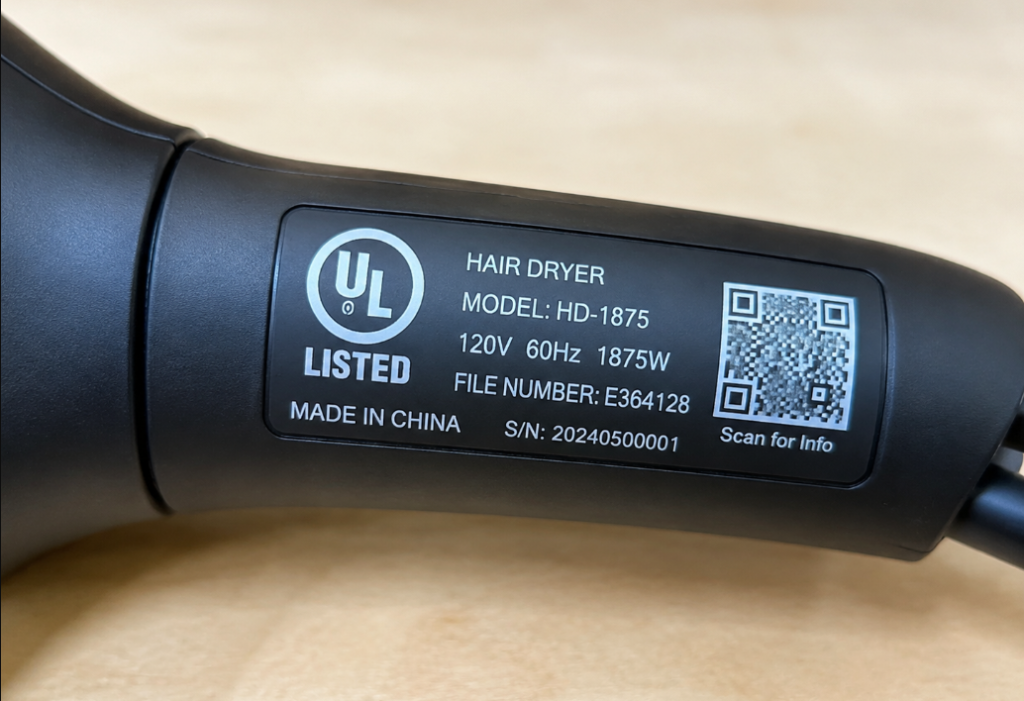
A reminder for all ordinary consumers: when buying complete machines, prioritize looking for NRTL complete machine listing marks such as UL Listed, ETL Listed, and CSA Listed. Don’t think it’s okay just because you see “the word UL”.
UL Recognized: For Components Only, Does Not Equal Complete Machine Safety
UL Recognized, also known as “UL认可” in Chinese, is for components and materials, such as power modules, capacitors, wires, plastic shells, switches, battery packs and other internal components of products.
It means that this component can be used in the design of UL-certified complete machines under specific use conditions, voltage and current ranges, and environmental limitations, but it does not mean that the complete machine using this component is necessarily safe — the structure, heat dissipation, and mechanical protection of the complete machine still need to be evaluated separately.
The mark of this certification is usually the reversed “UR” character, or marked with “RECOGNIZED”, which is mainly for product engineers and manufacturers. Ordinary consumers do not need to pay special attention to it. There is a very common pitfall here: when a merchant says “our core components have UL certification”, this does not mean that the complete machine has UL Listed. You must continue to ask “Is the complete machine UL Listed? What is the file number of the complete machine?”
UL Classified: Only Covers Specific Risks or Uses
UL Classified, also known as “UL分级” in Chinese, usually targets products such as fireproof materials, fire doors, industrial protective materials, and specific building components. Its core meaning is: this product only meets the requirements for a specified performance, a certain type of risk, or a specific scenario, and does not equal a comprehensive complete machine safety certification.
For example, if a fireproof board has passed UL’s fire rating classification, it only means that the fireproof performance of the board itself meets the standard. But if this board is used to make an electric oven, the electrical safety, overheat protection, and mechanical protection of the entire oven still need to be separately certified by UL Listed. You can’t say “our oven is safe because we use UL fireproof boards”.
When you see the Classified mark, be sure to read clearly its declared scope of application, installation conditions, grade and corresponding standards. Don’t take “single item compliance” as “comprehensive safety”.
UL Verified: Performance Verification, Not Safety Certification
UL Verified, also known as “UL验证” in Chinese, is often confused with UL Listed by many merchants, but it is not a safety certification at all.
It targets the performance indicators advertised by the manufacturer itself, such as the filtration efficiency of air purifiers, environmental protection statements of products, material composition content, the effect of a certain function, etc. Its core meaning is “UL has verified for you that the statement made by the manufacturer is true”, but it has nothing to do with the electrical safety and fire safety of the product.
For example, an air purifier marked “UL Verified 99% formaldehyde removal rate” only means that its formaldehyde removal effect has been verified by UL, and does not mean that the electrical safety of this purifier has passed UL Listed certification. When you see the Verified mark, be sure to read clearly what exactly it verifies, and don’t pay for it as a safety certification.
cUL, ULus, cULus: Differences Between the US and Canada
Many UL marks have markings such as “US”, “C”, “C-US”, which are used to distinguish applicable regions:
- UL Listed with the “US” mark is usually evaluated in accordance with US safety requirements and is applicable to the US market;
- Those with the “C” mark or called cUL are usually evaluated in accordance with Canadian safety requirements and are applicable to the Canadian market;
- Those with “C-US” or called cULus usually cover the requirements of both the US and Canada, and can be used in both markets.
It should be noted here that although many safety standards in the US and Canada are harmonized, there may still be national differences, differences in installation specifications, and differences in labeling requirements. So for whichever market you sell to, prioritize the certification with the corresponding mark. Don’t take it for granted that “with UL you can sell anywhere in North America”.
Formal UL Marks Must Have Verifiable Information
No matter what type of UL mark it is, a formal mark must have these characteristics:
First, it has a clear UL graphic logo and clearly indicates the certification type (Listed, Recognized, Classified, Verified, etc.), not just a UL pattern;
Second, it has traceable information, such as File Number, Control Number, Issue Number, Product Category Code (CCN), QR code, or records that can be found in UL’s official database;
Third, the information on the mark is consistent with the nameplate on the product itself: brand, model, rated voltage, current, power, purpose, indoor/outdoor use environment — all these must match.
There is also a very important principle: prioritize checking the nameplate, engraving or durable label on the product itself, don’t just look at packaging stickers, e-commerce main images or promotional posters — fake marks are easy to print on packaging and promotional images, but making a complete, traceable fake mark on the product itself is much more costly.
4. Which Products Need UL Certification? Judge by Risk and Scenario
Many people like to ask “does XX product need UL certification”, but in fact there is no standard answer to this question, because it depends not only on the product type, but also on the use scenario and sales region. We give you a general judgment framework.
High-Risk Categories That Should Prioritize UL/NRTL Certification
If it is the following categories of products, whether you are buying or selling, you must prioritize confirming UL or equivalent NRTL certification:
- Home appliance heating category: plug-in home appliances that generate heat, such as hair dryers, microwave ovens, air fryers, electric heaters, coffee makers, electric blankets, and electric kettles;
- Power supply and battery category: products with electricity and energy storage, such as chargers, power adapters, power banks, lithium battery packs, home energy storage, and power tool batteries;
- Lighting and electrical category: products directly connected to electricity, such as LED lamps, desk lamps, power strips, extension cords, sockets, wires and cables, and fixed-installation lamps;
- Fire protection and building materials category: products directly related to fire safety, such as smoke alarms, fire doors, fireproof materials, wire conduits, and fire alarm related equipment;
- Commercial equipment category: products used in public/commercial scenarios, such as commercial kitchen equipment, office electrical appliances, medical environment peripheral equipment, and laboratory electrical equipment.
Product Types That Generally Do Not Need UL Certification
The following categories of products usually do not require UL as a must-have option:
- Pure mechanical non-electrical ordinary daily necessities: such as plastic water cups, towels, ordinary stationery, non-electrical storage products, hand tools — these do not involve electrical safety risks at all;
- Food, drugs, cosmetics, health products: these products mainly depend on FDA’s regulatory requirements, labeling regulations, ingredient and efficacy compliance, which are not the same as UL’s electrical/product safety certification;
- Software, SaaS, digital content: they do not fall within the scope of physical product safety certification, so naturally they do not need UL.
Of course there are exceptions: if it is a pure mechanical product but involves protective equipment, child safety, building fire protection or industrial safety, it may need to comply with other standards or certifications such as ANSI, ASTM, NFPA, NIOSH, FM, but they have no direct relationship with UL.
Certification Requirements May Vary Greatly for the Same Category in Different Scenarios
Even for the same product, used in different places, the certification requirements may be different, mainly depending on these dimensions:
- Indoor use or outdoor use: outdoor lamps and garden appliances need to additionally meet requirements such as waterproofing, sun protection, and temperature cycling. Indoor use certification cannot be directly used outdoors;
- Dry environment or humid environment: equipment around bathrooms, kitchens, and swimming pools has higher requirements for moisture protection and electric leakage protection. Certification for dry environments cannot be directly used in wet areas;
- Residential, commercial or industrial use: commercial equipment usually has to withstand higher loads and longer operating hours, and the acceptance standards are stricter. Residential certification may not be applicable to commercial scenarios;
- Plug gable or fixed installation: fixed-installation equipment (such as recessed lamps, wall sockets) usually must comply with the National Electrical Code (NEC) of the United States or the Canadian Electrical Code (CEC), and must also pass the acceptance of the local AHJ, with much higher requirements than pluggable products.
You don’t have to memorize all standard numbers, just remember one judgment principle: certification must cover “product type + use scenario + sales region” at the same time — none of the three can be missing.
Key Boundary: Component Certification Does Not Equal Complete Machine Certification
This is the point that merchants most often use to piggyback on certification, so we emphasize it separately: a single part with UL Recognized approval only means that this part can be used in complete machine design under limited use conditions, it does not mean that the entire machine is necessarily safe at all.
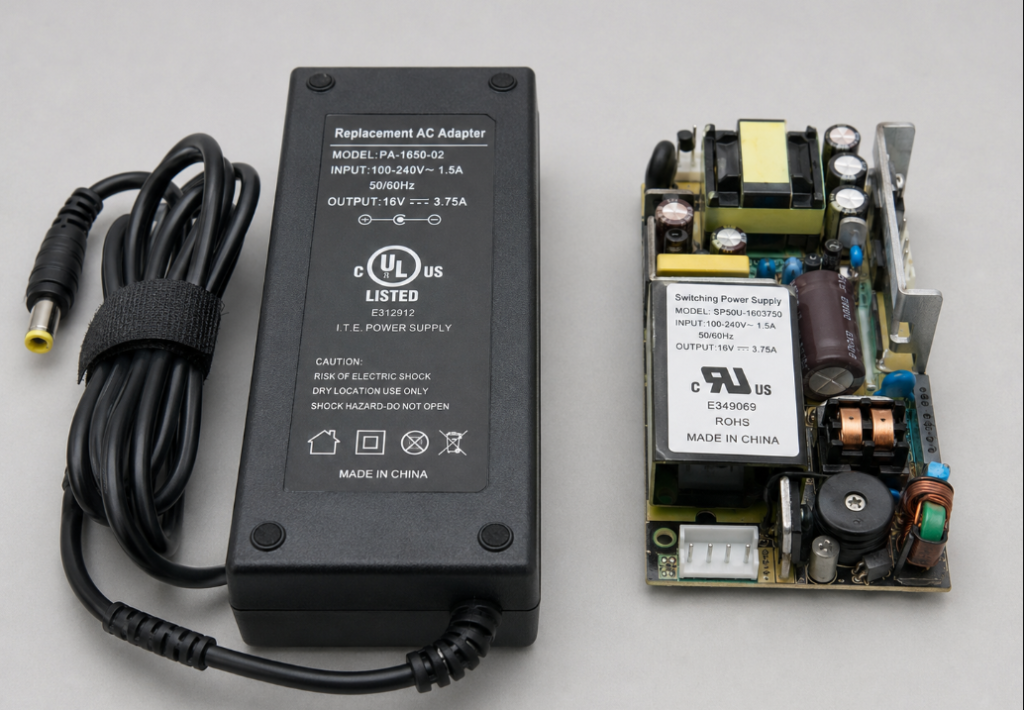
Take the most common example: the power module of a certain monitor has UL recognition, but the structural safety, heat dissipation design, screen shatter resistance, and internal wiring insulation of the entire monitor have not been evaluated by UL as a whole, so it cannot be called a “UL-certified monitor”. Similarly, when merchants say “we use UL-grade flame-retardant materials”, “our power cord is UL”, “our battery cells have UL certification”, none of these mean that the complete machine has passed UL Listed certification.
If it is a set of products, you should pay more attention: the main unit, power adapter, battery, charging dock, extension cord, controller — these electrical components may be produced by different manufacturers, and their certifications need to be verified separately. You can’t assume the whole set is safe just because the main unit has certification.
5. How is UL Certification Obtained? It’s Not Just a One-Time Test
Many people think that UL certification is just “send the sample over for testing, and if it passes, you get a certificate”. In fact, it is far from that simple. Its core logic is sample testing + document review + factory tracking, to avoid the problem of “qualified for submission but cut corners in mass production” from the source.
Core Operation Logic of UL Certification
For a product to obtain UL certification, the manufacturer must first submit materials such as samples, product drawings, Bill of Materials (BOM), certificates of key components, and user manuals. UL will first conduct a document review to confirm that the design meets the requirements of safety standards.
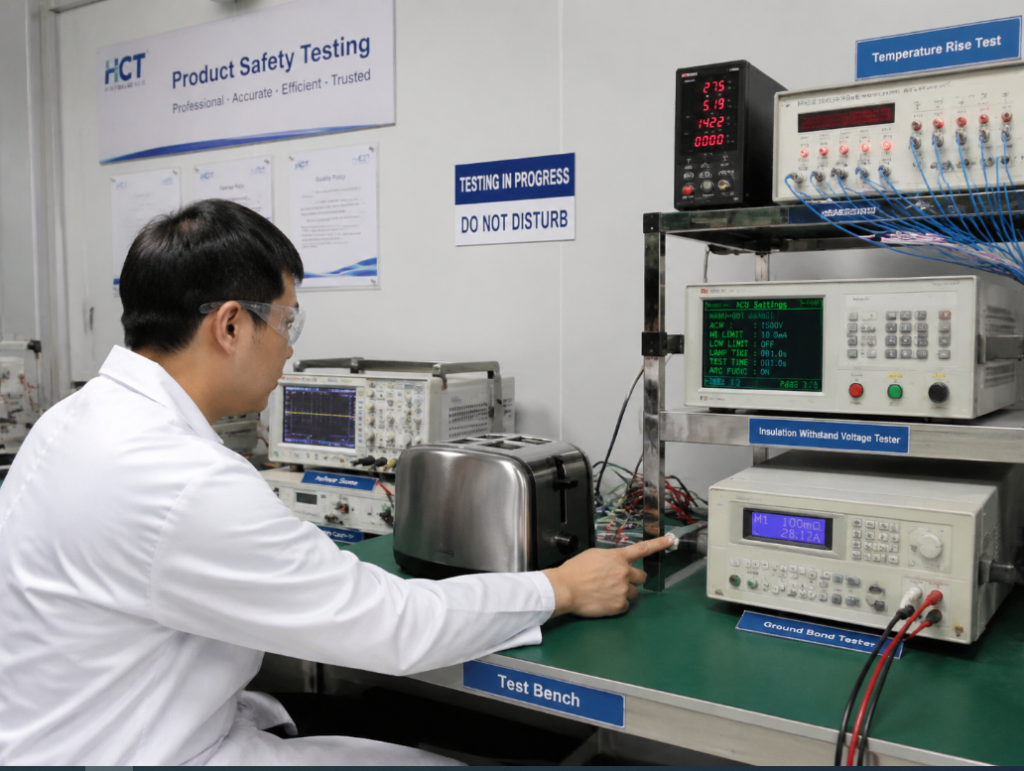
Then comes sample testing. In accordance with the corresponding safety standards, structural inspection, insulation test, temperature rise test, abnormal operation test, flame retardant test, mechanical strength test, etc. are carried out. As long as one item fails to meet the standard, rectification is required, and testing is repeated after rectification until all items pass.
After the sample test passes, UL will establish a certification file for this product, clearly listing the models, suppliers, and material specifications of all key components. During mass production, they must be completely consistent with this list and cannot be replaced at will.
The last and most critical step: factory follow-up service. UL will inspect the production factory regularly or irregularly to confirm that the mass-produced products are consistent with the submitted samples, key components are not replaced randomly, and the use of labels complies with specifications. If problems are found during inspection, the light consequence is rectification, and the serious consequence is suspension or even revocation of certification.
Simplified Certification Process
If the UL certification process is broken down into steps that ordinary people can understand, it is roughly like this:
Step 1: The manufacturer first clarifies the target market (US/Canada/dual market), product category, applicable safety standards, and the type of certification to be done (Listed/Recognized, etc.);
Step 2: Prepare all materials: drawings, bill of materials, certification certificates of key components, samples, manuals, label design drafts;
Step 3: UL or an authorized laboratory tests the samples according to the standards. If there are non-conformities during the process, it will put forward rectification requirements to the manufacturer, and re-test after rectification;
Step 4: After the sample test passes, UL will audit the factory’s production consistency control, label use specifications and quality system to ensure that qualified products can be mass-produced;
Step 5: After all requirements are met, UL will authorize the manufacturer to use the corresponding UL mark, and product information will be entered into UL’s official database to generate the corresponding certification file;
Step 6: The product enters subsequent factory follow-up inspections. The frequency of inspection depends on the product’s risk level, category and certification plan, and high-risk products are inspected more frequently.
Common Safety Test Items (Plain Language Version)
Many people get a headache when they see UL’s test items. In fact, you don’t need to memorize professional terms. What it tests are all the safety risks you can think of:
- Electric shock protection: it tests whether you can touch live parts, whether the insulation is sufficient, whether electric leakage can shock people, and whether the grounding is firm;
- Fire and flame retardant: it tests whether the shell material will spread when burned, and whether it will catch fire during short circuit, overload, or abnormal operation;
- Overheat protection: it tests whether the temperature of motors, transformers, batteries, and heating elements will be too high during long-term operation or locked rotor, and whether they will burn people or catch fire;
- Mechanical safety: it tests whether the structure is strong enough, whether it will break when dropped, whether there are places that can pinch hands, whether there are sharp edges, and whether moving parts can hurt people;
- Environmental tolerance: if the product is used outdoors or in humid environments, it also needs to be tested for high and low temperature, humidity, rain, corrosion, vibration, etc., to ensure that no safety problems occur in the corresponding environment;
- Label instructions: don’t underestimate labels. If rated parameters are marked incorrectly, warning words are not written clearly, or installation instructions are wrong, users may have accidents when using them incorrectly, so labels and manuals are also part of the safety assessment.
Validity Period and Common Invalidation Reasons of UL Certification
Many people ask “how many years is the validity period of UL certification”, and the answer is: there is no simple fixed validity period. Its validity depends on whether the product, factory and certificate status continue to meet the requirements. As long as they keep meeting the requirements, it remains valid; if they don’t, it may become invalid at any time.
Common reasons for invalidation are as follows:
First, product redesign, replacement of key components, replacement of materials, factory change or new production line, without reporting to UL in advance and without re-evaluation;
Second, unqualified factory follow-up inspection, such as key components not matching the certification list, illegal use of labels, poor production consistency control, and failure to pass rectification;
Third, the corresponding safety standards have been updated, and the certified products have not completed the necessary evaluation or rectification in accordance with the new standards;
Fourth, the certification is suspended, revoked, terminated by UL, or the manufacturer stops maintaining the certification on its own.
So whether you are buying things or procuring, you must check the current certification status for important products. Don’t just look at the photo of the certificate from a few years ago given by the seller. Being valid back then does not mean it is still valid now.
6. How to Check the Authenticity of UL Certification? Practical Operations That Ordinary People Can Do
Now that you know what UL is and what it’s for, the most critical step comes: how to check the authenticity of UL certification? In fact, you don’t need to find a professional institution, you can check it yourself.
Basic Judgment Characteristics of Real UL Marks
Before checking the database, looking at these points can filter out most fake marks:
- Check the position: Real UL marks are usually on the nameplate, shell engraving or durable label of the product itself. If the UL mark is only on the packaging and promotional images but cannot be found on the product itself, you should be vigilant;
- Check the type: The mark will clearly indicate types such as Listed, Recognized, Classified or Verified, not just a UL pattern;
- Check traceable information: You can find File No., Control No., Issue No., QR code or other queryable clues;
- Check consistency: The brand, model, rated parameters, sales region, and use environment on the mark match the information of the product itself.
If the product only has vague words such as “UL Certified”, “compliant with UL standards”, “UL-grade materials”, without any specific queryable information, it is most likely piggybacking on the concept, and the risk is very high.
Official Query Operation Steps
UL has an official certification database called UL Product iQ, which everyone can check. Some functions may require a free account registration, and the operation is very simple:
Step 1: First find the UL traceable information on the product itself. The most commonly used is the File Number. Be careful not to confuse letters and numbers, such as O and 0, I and 1, S and 5. If you enter it wrong, you definitely won’t find it;
Step 2: Open the official website of UL Product iQ, register or log in to your account (free basic query is sufficient);
Step 3: You can search by file number, company name, brand name, model, product category code (CCN) or keywords. Prioritizing search by file number is the most accurate;
Step 4: After finding the result, you need to check several key pieces of information: whether the Company, File Number, Category/CCN, Model, Standard, and Status all match;
Step 5: Also confirm whether this certification covers the complete machine or components, and whether it covers the US, Canada, or both US and Canadian markets. Don’t take component certification as complete machine certification;
Step 6: If you can’t find it, or the found information doesn’t match, ask the seller to provide the official UL certificate, Authorization Page, or UL’s official verifiable link. If they can’t provide it, treat it as high risk.
Common Fake UL/Piggybacking Certification Routines
The fake UL marks and piggybacking certification routines on the market are just these few types. If you know them in advance, you won’t fall into pitfalls:
- Only pattern without information: There is only a circular UL mark on the product, without any file number, control number or traceable information — it is a pure fake mark;
- Using component certification as complete machine certification: Merchants say “we have UL certification”, but in fact only components such as power supplies, wires, and plastic materials have UL Recognized, and the complete machine has no UL Listed at all;
- Misattribution: Using certification certificates of old models, other factories, or other brands to impersonate the certification of the current model, for example, taking the file number of brand A’s charger and printing it on their own no-name charger;
- Playing word games: Only saying “designed according to UL standards”, “UL-grade flame-retardant materials”, “UL-grade safety”, but in fact, they have not done UL listing certification at all, just piggybacking on the concept;
- Set padding: Only the power adapter in a set of products has UL certification, so they imply that the entire set of equipment has passed UL certification, but in fact the main unit, battery, etc. do not;
- Stealing real file numbers: Finding a real UL file number and printing it on their own products. When you check the file number it is real, but the corresponding brand, model, and product category don’t match at all.
Not Being Able to Find the Certification Does Not Necessarily Mean It’s Fake
Sometimes you can’t find the certification, it doesn’t necessarily mean it’s fake. It may be for these reasons:
- Input error: The most common is entering the wrong file number, model, or company name, confusing letters and numbers, or missing a few digits;
- Different certificate holder: The holder of the certification may be a foundry, parent company or importer, not the brand name you see. For example, you bought a brand A charger, but the certification is held by foundry company B. Of course you can’t find it by searching for brand A, you can only find it by searching the file number or company B;
- Data synchronization delay: For newly obtained certifications, or certifications that have just been changed, the database may take some time to synchronize. The official status of UL shall prevail;
- Wrong query scope: For example, searching the complete machine database with the component model, or searching the foundry’s certification with the brand name, you won’t find it;
- Certification has been suspended or revoked: It was valid before, but now it is invalid for various reasons. It may not be found in the database, or the status is displayed as abnormal.
If you encounter a situation where you can’t find it, don’t directly conclude it’s fake. First ask the seller to provide official certification documents, and check the brand, model, certificate holder, product category, and applicable region item by item. If they don’t match or the seller can’t provide them, then treat it as high risk.
Reminder for High-Risk Counterfeiting Categories
There are several categories of products that are high-incidence areas for fake UL marks and piggybacking certification. You must be extra careful when buying them: low-cost fast chargers, power adapters, power banks, lithium batteries, electric heaters, power strips, extension cords, LED lamps.
The reason why there are many fake marks in these categories is first, because the unit price competition is fierce, and many manufacturers are unwilling to spend money on real certification to reduce costs; second, it is difficult for ordinary consumers to distinguish the real from the fake with the naked eye; third, the consequences of accidents with these products are very serious, so the more this is the case, the less you can be greedy for cheap. When buying such products, prioritize choosing products that can provide a clear UL Listed file number, have consistent brand and model, and have a clear after-sales entity.
What to Do If You Find Fake Certification or Safety Problems
If you buy a product with fake UL certification, or the product has safety hazards, follow these steps:
First, stop using it immediately. Especially if the product has a burning smell, abnormal heating, sparks, deformed shell, or damaged power cord, cut off the power immediately and stop using it;
Second, keep all evidence: order records, product photos, nameplate photos, packaging photos, chat records with the seller, and screenshots of UL database queries;
Third, contact the seller, brand owner or platform customer service, ask them to explain the certification type and queryable file information, return the product if it should be returned, and claim compensation if it should be claimed;
Fourth, if it involves serious safety hazards, such as losses have been caused, or the product has large-scale risks, you can report it to the local consumer safety agency (such as CPSC in the US, Health Canada in Canada), the platform’s safety team, or UL’s official brand protection channel.
7. What’s the Difference Between UL and Other Common Certifications? Don’t Get Dizzy with Concepts
Many merchants pile up various certifications in their publicity, such as CE, ETL, CSA, FCC, FDA, RoHS, which makes people dazzled. In fact, different certifications are responsible for completely different things and cannot be confused.
Before comparing, first remember three judgment dimensions. No matter what certification it is, you can look at it from these three dimensions:
- What does it cover: Does it cover safety, electromagnetic compatibility, environmental protection, energy efficiency, or food and drugs, occupational protection, cybersecurity?
- Where does it apply: Is it the US, Canada, the EU, China, or the requirement of a certain purchaser?
- How to prove: Is it third-party testing + factory tracking, or third-party type test, or manufacturer’s self-declaration, registration and filing?
Different target markets, product risks, channel requirements, and local acceptance authorities require different certifications. No certification is “omnipotent”. Let’s compare the most common certifications with UL to help you quickly distinguish them:
| Certification Name | Main Coverage Regions | Core Focus | Certification Nature | Can It Replace UL? |
|---|---|---|---|---|
| CE | EU and European Economic Area | Compliance with multiple directives such as health, safety, and environmental protection | Most low-risk categories are manufacturer self-declared, high-risk categories require notified body participation | No, the North American market usually does not accept CE as a substitute for NRTL safety certification |
| ETL Listed | North America (US/Canada) | Product safety (same as corresponding standards under the NRTL framework) | Third-party testing + factory tracking, belongs to NRTL certification | Equivalent in most scenarios, cannot be replaced if the channel/acceptance authority explicitly requires UL |
| CSA | Mainly Canada, can cover the US | Product safety, standard compliance | Third-party testing + factory tracking, belongs to NRTL/Canadian recognized certification | Equivalent to cUL in the Canadian market, need to confirm the US mark for the US market |
| FCC | US | Electromagnetic compatibility, radio frequency compliance | Part is self-declared, part requires certification | Absolutely not, FCC does not manage electrical safety |
| FDA | US | Regulation of food, drugs, medical devices, cosmetics, etc. | Government regulation, different requirements for different categories | Absolutely not, FDA is not responsible for the safety of ordinary electrical products |
| RoHS | EU and many other regions | Restriction of hazardous substances (lead, mercury, etc.) | Material environmental compliance | Absolutely not, has nothing to do with use safety |
| Energy Star | US and many other regions | Energy efficiency level | Voluntary energy efficiency certification | Absolutely not, does not involve fire and electric shock safety |
Below we will pick a few of the most easily confused ones to explain in detail.
UL vs CE: The Difference Between North American Safety and EU Access
Many people think that CE and UL are the same thing, just in different regions, but in fact they are very different. UL is a safety certification for the North American market, tested by NRTL institutions in accordance with standards, and also requires factory tracking. CE is the access mark for the EU market. It is not a certificate issued by a single institution. For many low-risk products, CE is a manufacturer’s self-declaration. As long as the manufacturer confirms that it complies with the relevant EU directives, no third-party institution testing is required. Only high-risk categories such as medical devices, pressure equipment, and personal protective equipment require the participation of a Notified Body.
Therefore, CE cannot replace the requirements of the North American market for NRTL certifications such as UL/ETL/CSA. Conversely, UL cannot replace EU CE compliance. The markets and rules applicable to the two are completely different.
UL vs ETL: Both Belong to the NRTL System, Only the Brand Is Different
ETL Listed is a certification issued by Intertek. Like UL, it is an NRTL institution recognized by OSHA. As long as it is within the recognition scope of NRTL and tested in accordance with the corresponding UL/ANSI/CSA standards, ETL Listed and UL Listed are usually equivalent in safety access, and most channels, AHJs and insurance companies will recognize them.
The main difference between the two is: UL’s brand awareness is stronger in North America, and ETL’s cycle, cost or service method for some projects may be different from UL. If your sales channel, procurement contract or local AHJ explicitly requires “must be UL Listed”, then ETL cannot replace it; if there is no clear requirement, the two are generally interchangeable.
UL vs CSA: Common Choices for the US and Canada
CSA is a certification brand under the Canadian Standards Association system, with very high recognition in Canada itself. It is also an NRTL recognized by OSHA, so it can also issue certifications covering the US market.
UL can also cover Canada or both US and Canadian markets through the cUL or cULus mark. If you only do the Canadian market, either CSA or cUL is fine; if you only do the US market, ULus, ETLus, CSAus are all fine; if you do both US and Canadian markets, prioritize dual-market certification with the C-US/cULus mark, one certification covers both regions.
UL vs FCC: Safety and Electromagnetic Compatibility Cannot Replace Each Other
UL manages safety risks such as electric shock, fire, overheating, and mechanical injury, while FCC is the requirement of the US Federal Communications Commission, which manages radio frequency, electromagnetic radiation and electromagnetic interference, such as whether your mobile phone will interfere with other devices, and whether the frequency of WiFi devices is compliant.
Many electronic and electrical products, such as smart lamps, chargers, Bluetooth devices, and WiFi devices, may require both FCC compliance and UL/ETL/CSA safety certification. The two are completely different things and cannot replace each other. Don’t think the product is safe and qualified just because you see the FCC mark.
Boundaries of Other Common Certifications
There are several other certifications that often appear together with UL, let’s also briefly mention them:
- FDA: Manages food, drugs, medical devices, cosmetics, etc., and has nothing to do with the safety certification of ordinary electrical products;
- RoHS: Restricts hazardous substances such as lead, mercury, and cadmium in products, belongs to environmental compliance, and has nothing to do with whether the product will cause electric shock or fire when used;
- Energy Star: Manages energy efficiency levels, such as whether it saves electricity, and has nothing to do with safety;
- NFPA: National Fire Protection Association of the US, mainly formulates fire protection codes and installation requirements, often appears in conjunction with UL certification, but is not the same thing;
- FM Approvals: FM certification is more common in the fields of fire protection, explosion protection, and industrial risk control. It cannot simply replace UL, depending on the requirements of specific scenarios.
Remember one sentence: different certifications cover different risks. You can’t use one mark to replace all compliance requirements. Don’t be fooled by merchants’ “full certification” publicity. See clearly what each certification actually covers.
8. Use Boundaries and Pitfall Avoidance Guide for UL Certification
UL certification is a good thing, but you can’t blindly believe in it. It has clear use boundaries. Beyond the boundaries, even with a UL mark, it may not be safe.
Having a UL Mark Does Not Equal Absolute Safety
The validity of UL certification is premised. In the following situations, problems may occur even with a UL mark:
First, use beyond nominal conditions: For example, if a product marked 120V is forcibly plugged into a 220V power supply; if a lamp marked for indoor use is taken outdoors to get rained on, problems will definitely occur. This is not the fault of the certification;
Second, unauthorized modification or non-authorized repair: Certification only corresponds to the model, version, structure and key components at the time of certification. If you disassemble it yourself to modify the circuit, replace parts, or find an unauthorized person to repair it, destroying the original safety structure, the certification will be invalid;
Third, installation does not comply with specifications: Fixed-installation equipment, such as recessed lamps and electric water heaters, must be installed in accordance with the manual, NEC/CEC and local electrical codes. If you find someone who doesn’t understand to connect it randomly, even if the product has a UL mark, it may fail acceptance inspection, or even cause accidents;
Fourth, deliberate damage or improper use: UL certification covers normal use and reasonably foreseeable misuse, such as accidentally spilling a little water or accidentally dropping it on the ground. If you deliberately smash it, deliberately overload it, or deliberately connect wires randomly, it is definitely not within the scope of protection.
Pitfall Avoidance Tips for Online Shopping of UL Certified Products
Now many people buy electrical appliances online. Here are some practical pitfall avoidance tips for you:
First, the product detail page should clearly state “UL Listed” or equivalent “ETL Listed” “CSA Listed”, and provide queryable file number or certificate information. If there is only vague “UL certification” “UL-grade safety”, you should be more vigilant;
Second, after receiving the goods, check the nameplate and UL mark on the product itself as soon as possible. Don’t just look at the e-commerce main image and packaging stickers. Many fake marks are only printed on the packaging;
Third, for no-name high-risk electrical appliances whose prices are significantly lower than similar safe products, such as $9.9 fast chargers and $19.9 electric heaters, you must prioritize verification. Don’t be greedy for small gains and suffer big losses;
Fourth, for set products, check all electrical components: main unit, power adapter, battery, charging dock, extension cord, controller — each must have corresponding certification. Don’t just check the main unit and be done;
Fifth, stay vigilant against phrases such as “UL-grade”, “compliant with UL standards”, “core components UL certified”. Directly ask the merchant for the UL Listed file number of the complete machine. If they can’t provide it, don’t buy it.
Judgment of UL Validity for Second-Hand or Old Products
The second-hand market in North America is very developed, and many people buy second-hand electrical appliances. At this time, how to judge whether the UL certification is still valid?
If the product model is consistent with the certification, it has not been disassembled or repaired, has not been exposed to water, the shell is not damaged, there are no signs of burning, and the use environment meets the requirements of the manual, then it is basically usable. But if there are conditions such as aging power cord, loose plug, cracked shell, swollen battery, or abnormal heating, don’t use it even if it has a UL mark, because the product itself has been damaged and safety is not guaranteed.
Also note: the UL mark on old products only means that it may have passed certification when it left the factory. It does not mean that the certificate is still valid now, nor does it mean that the physical product is still in a safe state. Especially for high-risk second-hand products such as chargers, batteries, electric heaters, electric blankets, and power strips, try to buy them cautiously, because you don’t know how they were used before.
Identification of Common Vague Phrases Used by Merchants
In order to ride the wave of UL’s popularity, merchants use many vague phrases. When you hear these words, be sure to ask one more question:
- “UL-grade safety”: A typical marketing word with no practical meaning. Directly ask “Is it UL Listed? What is the file number? Which model does it correspond to?”
- “Core components have passed UL certification”: It only means that a certain component has UL Recognized, and cannot mean that the complete machine is safe. Continue to ask “Does the complete machine have UL Listed?”
- “Global certification”: Empty talk. If there is no specific certification list and evidence, don’t believe it. Ask clearly what specific certifications there are and which market each corresponds to;
- “Produced according to UL standards”: It does not mean that it has actually passed UL testing, nor does it mean that it has entered UL’s factory follow-up service. To put it bluntly, it is just what the manufacturer says, without third-party endorsement.
The general inspection method is: ask clearly the certification type, applicable model, certificate holder, standard number, file number, and whether it can be found on UL Product iQ. If they can’t answer or are vague, treat them all as high risk.
Home Use Safety Inspection Checklist
Even if you buy products with UL certification, you should pay attention to safety in daily use. Here is a simple home inspection checklist for you:
- When using it for the first time, first check for strange smells, abnormal noise, abnormal heating, sparks, or shell deformation. If there is a problem, cut off the power immediately and return it;
- Regularly check the power cord, plug, shell, switch, and heat dissipation holes for damage, aging, or blockage. If there is a problem, stop using it;
- High-power electrical appliances, such as electric heaters, electric kettles, and ovens, should not share cheap power strips for a long time, do not connect several extension cords in series, and do not cover the heat dissipation holes;
- In humid or open-air environments such as bathrooms, kitchens, and outdoors, be sure to use products marked as suitable for wet areas/outdoor use. Don’t take indoor-use products there;
- Battery products, such as power banks, lithium batteries, and power tool batteries, should avoid high temperature exposure, extrusion, and water ingress. Do not use non-original or non-compliant chargers.
Quick Judgment Tool: 30-Second Preliminary Judgment + 3-Minute Verification
Finally, here is a super practical quick judgment method. You don’t need to spend too much time to avoid most pitfalls:
- 30-second preliminary judgment: First check if the product is high-risk (electrified, heat-generating, battery-powered, fixed-installation), then check if there is a UL Listed or equivalent NRTL mark, whether the mark is on the product itself, and whether there is a traceable file number. If all four conditions are met, it is preliminarily okay;
- 3-minute verification: Open UL Product iQ, enter the file number or model, check the company, model, product category, applicable standard, coverage region and current status. If all match, there is no problem.
If you can’t find it, the information doesn’t match, there is only component certification, or the seller refuses to provide information, directly treat it as high risk, don’t hesitate.
9. Practical Decision Paths for Different Groups of People
Different groups of people pay attention to different points of UL. We have sorted out the most practical decision steps for each, just follow them.
Ordinary Consumer Purchase Path
- First judge the risk level of the product: for high-risk products that are plug-in, heat-generating, battery-powered, long-term powered on, or fixed-installation, be sure to verify the certification;
- Check whether there is a complete machine listing mark of NRTL such as UL Listed, ETL Listed, CSA on the product itself, as well as a traceable file number;
- Query on UL Product iQ or the database of the corresponding institution, or ask the seller to provide official certification materials;
- Check whether the model, use scenario, sales region and certification match. If they don’t match, don’t buy it no matter how good the publicity is.
Cross-Border Seller Compliance Path
- First confirm the target market and channel requirements: is it the US or Canada, is it Amazon, offline retail or commercial procurement? Different channels have different requirements;
- Confirm the product category and applicable safety standards. If you are not sure, you can consult an NRTL institution or a professional compliance consultant. Don’t use the wrong standard;
- Prepare materials in advance: product drawings, bill of materials, certification certificates of key components, samples, manuals, label design drafts;
- Prioritize certification
10. Frequently Asked Questions
Finally, we have compiled several of the most commonly asked questions and answer them collectively here.
Is UL Certification Mandatory?
Most consumer products are not uniformly mandatory at the US federal level, but channels such as Amazon and Walmart, local building codes, commercial premises, insurance companies, and local AHJs (Authority Having Jurisdiction) may have de facto requirements. In many scenarios, products cannot be sold, installed, or used without certification.
Which Is More Important: UL Listed or UL Recognized?
For ordinary consumers, UL Listed is definitely more important when buying complete machines, as it is the safety certification for the complete machine; UL Recognized is component certification, mainly for engineers and manufacturers, and cannot represent the safety of the complete machine.
Is UL Still Needed If There Is CE?
If a product is to enter the North American market, or be installed and accepted in North America, NRTL certifications such as UL, ETL, and CSA are usually still required. CE is the EU’s access mark and cannot replace the safety certification requirements of the North American market.
Can ETL Replace UL?
Within the recognition scope of OSHA NRTL, and when the sales channel or accepting party does not explicitly require UL Listed, ETL Listed can usually serve as an equivalent safety certification; however, if the contract, platform, or AHJ explicitly specifies UL, it cannot be replaced.
Is It Fake If It Can’t Be Found on Product iQ?
Not necessarily. It may be due to input errors, the certificate holder being an OEM instead of the brand, new certification data not yet being synced, searching the wrong category, or the certification having been suspended/revoked. But if the seller cannot provide credible official documents to prove the certification is valid, treat it as high risk.
Does UL Certification Have an Expiration Date?
UL certification does not have a simple fixed validity period; its validity depends on whether the product continues to comply with standards, whether factory follow-up inspections are qualified, and whether the certificate status is normal. If the product has not been redesigned, the factory has no issues, the standards have not been updated, and the certificate status is normal, it remains valid; otherwise, it may become invalid. Be sure to check the current status before important purchases.
Summary: 6 Things You Can Independently Judge After Reading This Article
At this point, the core content of UL certification has been covered. After reading this article, you should be able to independently judge these 6 things:
First, you can clearly explain that UL is a third-party safety certification system, not a universal government seal, nor does it equal good product quality; it is only the passing line for safety;
Second, you can distinguish the differences between UL Listed, Recognized, Classified, and Verified, and know that ordinary consumers should prioritize Listed when buying complete machines;
Third, you can judge which products require priority checking for UL/NRTL certification and which do not, so you will no longer waste money unnecessarily;
Fourth, you can verify the authenticity of certification on your own using UL Product iQ or official documents, and identify common fake marks and certification-riding tricks;
Fifth, you can distinguish the boundaries of different certifications such as UL, CE, ETL, CSA, FCC, FDA, RoHS, and Energy Star, and will not be fooled by merchants’ conceptual gimmicks;
Sixth, you can understand the usage conditions and invalidation risks of UL certification, and will not blindly believe that “having UL means absolute safety.”
Overall, UL is not some mysterious high-end certification, nor is it a gimmick used by merchants to raise prices; it is a mature and reliable safety access system for the North American market. For ordinary consumers, it can help you filter out the most dangerous batch of low-quality electrical appliances; for sellers and purchasers, it is a compliance threshold that must be understood for the North American market. Understand its boundaries and know how to check authenticity, and you can avoid the vast majority of safety and compliance pitfalls.