
Introduction
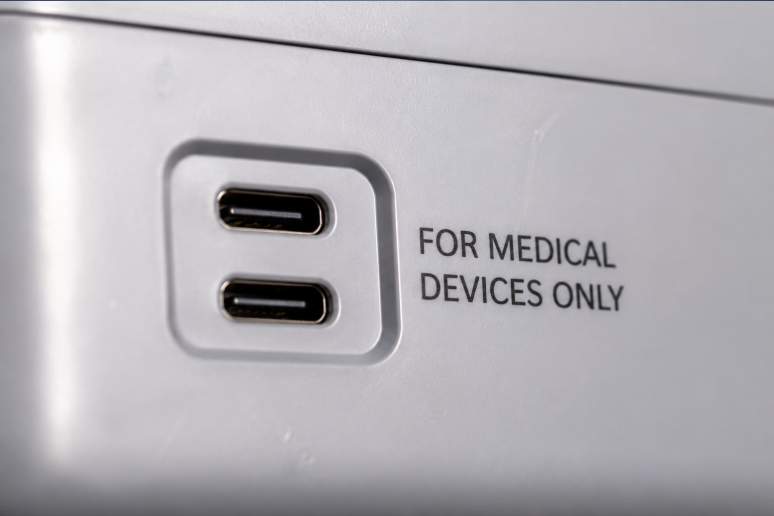
If you have ever wondered why a hospital patient monitor uses a USB-C cable but cannot be charged with a regular phone charger, you have encountered the hidden gap between consumer electronics and medical-grade power systems. A medical USB charger is not simply a higher-quality phone charger. It is a specialized power solution designed to meet strict healthcare safety requirements. USB connectors look identical across devices, but the safety rules governing how they deliver power in healthcare settings are drastically stricter than those for home or office use. A standard charger that works perfectly for a smartphone could create measurable risks for patients, from subtle interference with heart monitors to dangerous electrical leakage for people connected to conductive medical equipment.
Medical USB charging is not a faster version of consumer charging — it is an entirely separate framework built around one non-negotiable priority: patient safety. Every design choice, from insulation thickness to electromagnetic shielding to surface material, is calibrated to reduce risk in environments where even minor failures can have serious consequences. This guide breaks down the core standards, scenario-based requirements, certification rules, and practical selection tips for medical USB charging, in plain language accessible to both healthcare staff and home medical device users.
Key Takeaways: 6 Critical Facts
- Medical USB charging is designed around patient safety, not charging speed, and follows a completely separate standard system from consumer smartphone charging.
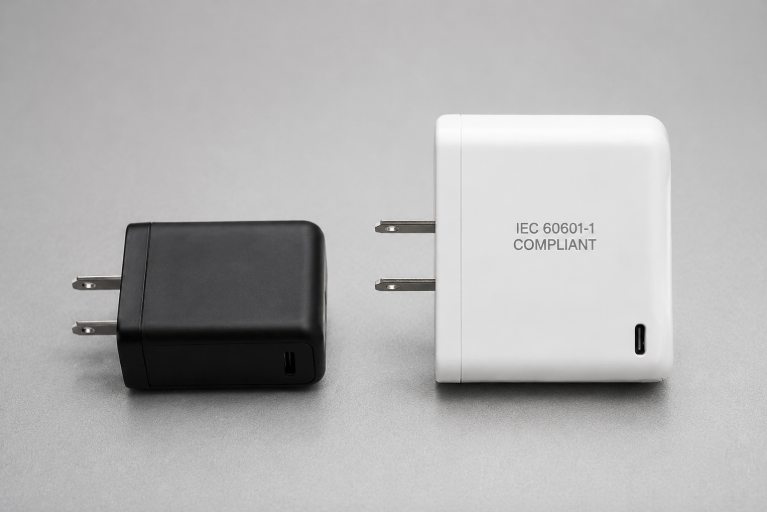
- Medical power supplies used with medical devices are typically required to comply with IEC 60601-1 safety requirements, especially when they are part of the medical electrical system.
- USB-C is only a physical connector shape; it does not automatically mean a charger meets medical safety requirements.
- Safety requirements vary significantly by setting: ICU and operating rooms have the strictest rules, while home care settings allow more moderate specifications.
- A standard CE mark does not equal medical compliance. Consumer CE certification and medical device CE certification follow entirely different regulations.
- Charging cables are an often-overlooked core component; medical-grade cables must withstand frequent disinfection, reduce electromagnetic interference, and last through heavy repeated use.
1. Basic Overview of Medical USB Charging
1.1 Definition and Scope
Medical USB charging refers to USB-based power delivery systems used in healthcare settings to power portable medical devices, patient monitoring equipment, and in some cases personal patient electronics. It covers everything from infusion pumps and blood glucose meters to wearable heart monitors and portable ultrasound devices.
Unlike generic consumer charging, medical USB systems used to power medical devices are classified as part of the medical device ecosystem in most global markets, and are held to the same safety and reliability standards as the devices they power. Public charging stations for patient personal devices in waiting areas follow separate general electrical safety rules.
1.2 Core Differences Between Medical and Consumer USB Charging
The gap between the two categories is comparable to the difference between casual running shoes and sterile surgical footwear — they may look similar at a glance, but they are built for completely different risk levels.
- Core priority difference: Consumer charging prioritizes speed and cost. Medical charging prioritizes patient safety and uninterrupted reliability.
- Safety requirement difference: Medical chargers add mandatory layers of electrical isolation, leakage current control, electromagnetic compatibility, and disinfection resistance that consumer products do not require.
- Durability difference: Medical-grade components are built for far more frequent plug cycles, harsher chemical exposure, and wider temperature ranges than consumer electronics.
1.3 Common Application Scenarios
- Clinical hospital settings
- Emergency transport and mobile medical teams
- Home health and home care environments
- Public healthcare waiting areas and outpatient clinics
2. Medical USB Charging vs Consumer USB Charging: Key Differences
| Feature | Consumer USB Charger | Medical USB Charger |
|---|---|---|
| Main goal | Fast charging speed | Patient safety and reliable operation |
| Safety standard | IEC 62368-1 consumer electronics safety | IEC 60601-1 medical electrical safety |
| Leakage current | General consumer limits | Strict medical limits (microamp range for high-risk patient contact) |
| EMC requirements | Standard home/office environment | Healthcare-grade low emission + high immunity |
| Disinfection resistance | Not designed for regular chemical cleaning | Built to withstand repeated hospital-grade disinfection |
| Certification | General consumer safety marks | Medical device regulatory compliance (FDA, MDR, etc.) |
3. Five Core Requirements for Medical USB Charging
3.1 Electrical Safety (Foundational Constraint)
Electrical safety is the non-negotiable backbone of all medical USB charging standards, defined globally by the IEC 60601-1 medical electrical safety specification. In simple terms, the classifications below define how much protection is required depending on how closely the device connects to the human body.
- Protection levels: The standard defines two tiers of protection. MOOP (Means of Operator Protection) sets baseline safety for healthcare staff, while MOPP (Means of Patient Protection) sets far stricter rules for equipment that comes into contact with patients.
- Insulation and isolation: Medical chargers require either double insulation or reinforced insulation between the wall power supply and the USB output, with standard isolation withstand testing of 1500V AC for one minute. This prevents dangerous voltage from reaching the patient side even if a component fails.
- Leakage current control: This is the most visible difference between medical and consumer chargers. Patient leakage current limits are extremely strict, often reaching microamp-level requirements for higher-risk patient-connected applications such as Type CF cardiac equipment — significantly stricter than typical consumer electronics requirements. To put it in perspective, even tiny currents that would be unnoticeable in everyday electronics can create risk for vulnerable patients connected to conductive medical equipment.
- Patient contact classification:
- Type B: Low-risk patient contact, such as surface temperature sensors
- Type BF: Isolated body contact, such as blood pressure cuffs and ultrasound probes
- Type CF: Direct cardiac contact, the strictest classification, required for devices like catheters and dialysis equipment
3.2 Electromagnetic Compatibility (EMC)
Hospitals are filled with sensitive electronics that measure tiny biological signals — a faint electrical noise from a cheap charger could distort an ECG reading or trigger a false alarm on a patient monitor. The IEC 60601-1-2 standard governs medical EMC requirements with two core rules:
- Low emission: Chargers must produce minimal electromagnetic noise so they do not interfere with monitors, infusion pumps, ventilators, or implanted devices like pacemakers.
- High immunity: Chargers must continue working reliably even when exposed to electromagnetic interference from other hospital equipment.
In sensitive areas like ICUs and operating rooms, these limits are tightened further to eliminate any risk of disrupting life support systems.
3.3 Environmental and Durability Requirements
Medical equipment operates in far harsher day-to-day conditions than office electronics.
- Disinfection resistance: Charger housings and cables must withstand repeated wiping with isopropyl alcohol and hospital-grade disinfectants without cracking, fading, or degrading. Consumer plastic housings often break down after only a few weeks of regular medical disinfection.
- Physical protection: Medical devices meet specified IP dust and water resistance ratings for their use case. Medical products often use flame-retardant materials evaluated according to applicable fire safety requirements.
- Mechanical lifespan: Medical-grade USB ports are rated for a minimum of 5000 plug cycles, and often far more, to handle heavy daily use in busy clinical settings.
3.4 Material and Biosafety Requirements
Patient-contact components of medical charging systems may require biocompatibility evaluation according to ISO 10993. This means materials must be non-toxic, non-irritating, and non-allergenic, even for patients with sensitive skin. Many medical devices also use antimicrobial surface coatings on high-touch areas to reduce cross-contamination risk.
3.5 Data Security Requirements
For USB ports that support both charging and data transfer, healthcare settings require strict physical or software isolation between power and data lines to prevent malware injection into hospital networks. USB-enabled medical systems that process patient data must follow healthcare privacy requirements such as HIPAA and GDPR, which mandate encryption and access tracking for all patient-related data transfers. Many hospital charging ports are intentionally designed as charge-only with no data pins for this exact reason.
4. Tiered Requirements by Medical Setting
Not all medical environments require the same level of safety. Requirements scale based on how close the charger is to vulnerable patients and how critical nearby equipment is.
4.1 ICU and Operating Rooms (Highest Safety Tier)
Equipment located within the patient environment must be evaluated according to medical electrical system requirements, with the strictest isolation and leakage current rules. Non-medical-grade chargers are strictly prohibited near life support equipment. These settings also require chargers to work with hospital emergency backup power systems to avoid interruptions during power failures.
4.2 General Patient Wards
Bedside medical device charging still requires full medical-grade isolation, but rules for personal patient device charging are slightly more flexible. Facilities must maintain clear electrical separation between medical device power circuits and general consumer device charging ports.
4.3 Outpatient and Public Waiting Areas
Public charging stations for patient and visitor personal devices follow standard electrical safety rules, with mandatory overcurrent protection and per-port fault isolation so a failure on one port cannot spread to others. Infection control rules still apply to all high-touch surfaces.
4.4 Emergency Transport Settings
Ambulance and medical transport chargers must meet extra requirements for wide voltage input tolerance, vibration resistance, and locking connectors that cannot accidentally pull loose during transport.
4.5 Home Care Settings
Home medical device charging follows the same core safety standards as clinical equipment, but designs often include simpler interfaces and more forgiving user error tolerance for non-professional caregivers.
5. Core Components and Device-Side Charging Management
5.1 Medical-Grade USB Charging Adapters
- Power and protocols: Most medical chargers use standard USB PD/PPS protocols for broad compatibility. Proprietary fast-charging protocols are rarely used in medical settings, as they introduce extra complexity and thermal risk without sufficient clinical benefit.
- Protection features: Medical adapters typically include multiple protection mechanisms, such as overvoltage protection (OVP), overcurrent protection (OCP), short circuit protection (SCP), and overtemperature protection (OTP).
- Multi-port charger rules: Medical multi-port chargers require independent isolation on every port, so a fault on one port cannot affect other connected devices — a feature almost never found on consumer multi-port chargers.
5.2 Medical-Grade USB Charging Cables
Cables are the most frequently underestimated part of a medical charging system. A consumer cable used in a clinical setting can create as much risk as a non-medical charger.
- Electrical performance: High-shielding cable construction reduces electromagnetic interference that could disrupt nearby monitoring equipment.
- Environmental compatibility: Cable jackets are made from chemical-resistant materials that hold up to daily disinfectant wiping without breaking down.
- Mechanical design: Reinforced strain relief and optional locking connectors prevent accidental disconnection during patient transport or busy clinical workflows.
5.3 Charging Management for Battery-Powered Medical Devices
For portable medical devices with built-in batteries, charging is managed by a dedicated battery management system (BMS) that prioritizes safety over speed.
- BMS safety role: The BMS continuously monitors battery voltage, temperature, and current to ensure stable, reliable charging under all conditions.
- Core protection features: Mandatory overcharge protection, overdischarge protection, and thermal protection prevent battery failures that could disrupt patient care.
- Fast charging tradeoff: While fast charging would improve device turnover between patients, many medical devices limit charging speed to reduce heat generation and extend battery lifespan. Reliability always takes priority over convenience in clinical environments.
6. Global Regulatory and Certification Requirements
6.1 European Union
Medical USB chargers sold as medical device accessories in the EU must carry a CE mark issued under the Medical Device Regulation (MDR 2017/745), based on compliance with EN 60601 series standards. This is entirely separate from the standard consumer CE mark issued under low-voltage and EMC directives — a consumer CE mark is not valid for medical use. Higher-risk devices require review by an independent Notified Body.
6.2 United States
In the U.S., medical device chargers fall under FDA regulation, and typically require a 510(k) premarket notification if they are sold as part of a medical device system. They must also meet UL 60601-1 safety certification from a Nationally Recognized Testing Laboratory (NRTL) such as UL or TÜV. Healthcare facilities also follow NFPA 99 healthcare electrical system codes for installation and use.
6.3 Japan
Japanese market medical chargers require PMDA medical device certification, with compliance to JIS T 0601 series standards, the Japanese equivalent of IEC 60601. Additional radio law requirements apply to any device with wireless charging functionality.
6.4 Other Major Markets
Australia requires TGA registration, and Canada requires Health Canada compliance, both of which largely align with IEC 60601 international standards.
7. Selection and Practical Usage Guide
7.1 3-Step Compliance Selection Method
- Match the safety tier to your setting: Start by identifying the use case — ICU, general ward, transport, or home care — and select a charger rated for that risk level.
- Verify regional medical certifications: Confirm the charger carries the correct medical-grade certification for your market, not just consumer safety marks.
- Check power and protocol compatibility: Match the charger’s output power and PD/PPS support to the device you are powering; higher wattage is not always better, as excess capacity adds unnecessary cost and thermal load.
7.2 Recommendations for Different User Groups
- Healthcare facility procurement: Always verify full certification documentation, test reports, and supplier ISO 13485 quality system certification before bulk purchase.
- Home care users: Always use the charger recommended by the device manufacturer, and only replace it with a certified medical-grade equivalent. Never substitute a consumer phone charger for medical device use.
7.3 Daily Use and Maintenance Rules
- Usage prohibitions: Never cover chargers and block ventilation, never plug or unplug with wet hands, and never use uncertified third-party chargers for medical devices.
- Disinfection best practices: Only use disinfectants listed as compatible with the device material to avoid degrading plastic housings and cables.
- Regular inspection: Check cables for fraying, connectors for wear, and housings for cracking on a scheduled basis. Replace components at the first sign of damage.
8. Common Misconceptions and Risk Warnings
- Myth: A USB-C connector means a charger is medical-grade and safe.
Reality: USB-C is only a physical shape. A consumer USB-C charger has none of the isolation, leakage current, or EMC controls required for medical use. - Myth: Any charger with a CE mark can be used in hospital wards.
Reality: Standard consumer CE marks follow basic LVD/EMC rules. Medical CE marks follow the MDR regulation and meet IEC 60601 standards — they are not interchangeable. - Myth: Higher charging power is always better.
Reality: Higher power creates more heat and higher electromagnetic interference. Medical settings should only use the minimum power required for the device, for maximum safety and reliability. - Myth: Any high-quality third-party cable works as a replacement for the original medical cable.
Reality: Generic cables may lack proper shielding, causing interference with monitors, or may break down quickly with regular medical disinfection, creating infection and electrical risks. - Myth: Wireless charging is safer than wired charging in medical settings.
Reality: Wireless charging produces electromagnetic fields that can interfere with implanted devices like pacemakers, and generates more waste heat than wired charging. It requires separate risk assessment for clinical use. - Myth: Slow charging on medical devices means the charger is broken.
Reality: Many medical devices intentionally limit charging speed to protect battery life and reduce thermal risk. Slow, steady charging is a deliberate safety feature, not a defect, for most clinical equipment.
9. Frequently Asked Questions (FAQ)
Q: What makes a USB charger medical grade?
A: A medical-grade USB charger is designed and tested to meet IEC 60601 medical electrical safety standards, including reinforced isolation, strict leakage current limits, and healthcare-grade electromagnetic compatibility. It also holds valid medical device regulatory certification for its target market, such as FDA clearance in the U.S. or MDR CE marking in the EU.
Q: Are USB-C medical chargers different from regular USB-C chargers?
A: Yes, completely. The USB-C connector shape is identical, but medical-grade USB-C chargers include extra safety features, isolation, and EMC shielding that consumer USB-C chargers do not have. The physical connector shape alone tells you nothing about medical safety compliance.
Q: What is the actual difference between a medical-grade USB charger and a regular charger?
A: The core difference is patient safety design. Medical chargers add reinforced electrical isolation, strict microamp-level leakage current limits, medical EMC controls, and disinfection-resistant materials that consumer chargers do not include. They are also regulated as medical device accessories rather than general consumer electronics.
Q: What are the core international standards for medical USB charging?
A: The global baseline standard is IEC 60601-1 for electrical safety, paired with IEC 60601-1-2 for electromagnetic compatibility. ISO 10993 governs biocompatibility for patient-contact parts.
Q: Can I use a regular phone charger for my home medical device?
A: No. Even for home use, medical devices require medical-grade chargers. A consumer charger may have high enough leakage current to create risk, especially for devices with direct skin or conductive contact.
Q: Why do medical devices charge so much slower than smartphones?
A: Many medical devices intentionally limit charging speed to reduce heat generation, extend battery lifespan, and maintain stable, reliable performance. In medical settings, safety and long-term reliability always take priority over charging speed.
Q: Can patients bring their own chargers to use in hospital rooms?
A: Policies vary by facility, but personal consumer chargers are generally restricted from bedside areas near medical equipment due to interference and electrical safety risks. Most hospitals provide designated public charging areas for personal devices.
Q: How can I quickly tell if a USB charger is medical-grade?
A: First, check for explicit labeling of IEC 60601-1 or EN 60601-1 compliance. Second, verify the certification mark: medical CE (MDR) for the EU, UL 60601-1 for the U.S., or PMDA approval for Japan. If it only lists standard consumer safety marks, it is not medical-grade.
Q: What certification marks are mandatory for medical-grade chargers?
A: This varies by market: MDR CE for the EU, FDA clearance + UL 60601-1 for the U.S., and PMDA certification for Japan. All medical-grade chargers will explicitly state their IEC 60601-1 compliance and patient contact classification (B/BF/CF).
Q: Can I replace a lost original medical charging cable with a high-quality third-party cable?
A: It is not recommended. Generic cables may lack the required electromagnetic shielding, or may degrade quickly with medical disinfectants. Always use manufacturer-approved or certified medical-grade replacement cables.
Q: Do USB chargers in ambulances need to be medical-grade?
A: Yes. Ambulance chargers used for medical equipment must meet full medical-grade standards, plus additional requirements for vibration resistance and wide voltage input to handle vehicle electrical systems.
Q: Do home devices like CPAP machines and portable oxygen concentrators require medical-grade chargers?
A: Yes. Any device classified as a medical device requires a matching medical-grade power supply, even when used at home. The safety classification applies to the device itself, not just the location of use.
Q: Can wireless charging pads be used in intensive care units?
A: Generally no, unless they have passed specific medical EMC and implanted device compatibility testing. Wireless charging electromagnetic fields can interfere with pacemakers and other sensitive medical equipment.
Q: Why are medical-grade USB chargers so much more expensive than regular ones?
A: The extra cost comes from reinforced insulation components, strict leakage current testing, medical EMC shielding, disinfection-resistant materials, and the cost of medical regulatory certification and compliance documentation.
10. Industry Development Trends
- Technology evolution: Gallium nitride (GaN) technology is enabling smaller, cooler-running medical power adapters, and USB PD 3.1 EPR is opening the door to higher-power charging for larger portable devices like handheld ultrasound systems.
- Setting expansion: Growth in home health and remote patient monitoring is driving standardization of safe, user-friendly medical charging solutions for residential use.
- Regulatory direction: Global medical device regulations continue to tighten, with stricter post-market surveillance and more detailed documentation requirements for all medical accessory components including chargers.
11. Summary
Medical USB charging is built on a foundation of patient safety that sets it entirely apart from consumer electronics charging. The IEC 60601 series of standards defines strict requirements for electrical isolation, leakage current control, electromagnetic compatibility, and material safety that no consumer charger is designed to meet.
Safety requirements scale with use case: critical care settings like ICUs have the strictest rules, while outpatient and home care settings follow more moderate but still mandatory medical standards. Certification marks vary by global market, and buyers must always verify that a charger carries medical-specific certification, not just consumer safety marks.
When selecting medical charging equipment, always match the safety rating to your use case, follow manufacturer guidelines for replacement parts, and maintain regular inspection and disinfection routines. While medical-grade chargers cost more than consumer alternatives, they are a non-negotiable component of safe, reliable patient care in every clinical and home medical setting.