
Introduction
If you have ever plugged your phone into a USB-C port in a rental car, only to find it charges three times slower than the port in your own vehicle, you have experienced the gap between USB-C as a physical shape and USB-C as a performance standard. Many drivers assume the familiar reversible connector guarantees a consistent fast-charging experience, but in automotive environments, that small port is the visible tip of a layered system of engineering rules, reliability tests, and compatibility requirements that define what it can actually do.
Automotive USB-C ports do not follow a single one-size-fits-all speed rule. Instead, they are built on a foundation of universal USB baseline standards, overlaid with vehicle-specific durability and electromagnetic compatibility rules, and finally tuned by automakers to fit the vehicle’s trim level and intended use. This guide breaks down those core standards, explains why performance varies so widely across vehicles, and clarifies what common certifications and specifications actually mean for everyday charging.
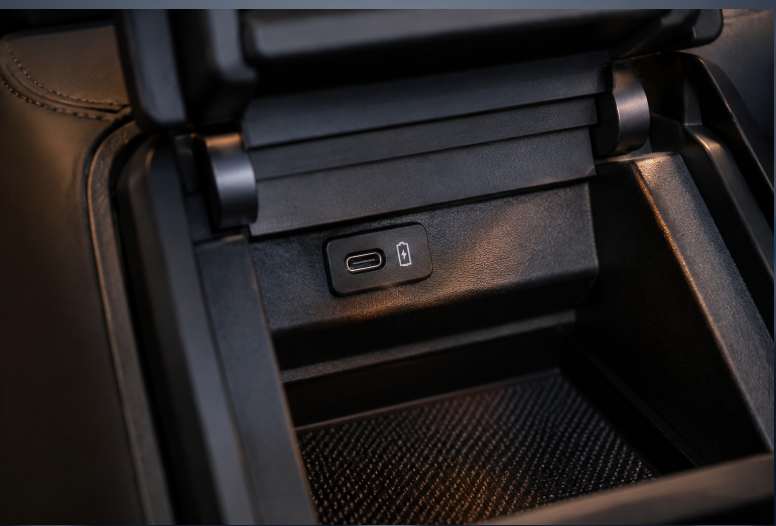
Key Takeaways: 5 Critical Facts
- USB-C only describes the physical shape of the connector. Actual charging speed and features are set by underlying standards, and performance varies dramatically between different vehicles.
- Automotive USB-C ports must meet both universal USB baseline rules and strict automotive-grade reliability requirements, making them far more robust than consumer-grade home chargers.
- Electromagnetic compatibility standards are the primary reason most factory data-focused ports have limited charging power, not simple cost-cutting.
- The industry follows three informal power tiers — basic data ports, standard fast-charging ports, and high-power fast-charging ports — with no mandatory universal power requirement.
- Major global regions have separate compliance and certification rules, with well-defined regulations for automotive electronics in the European Union, the United States, and Japan.
1. Overview of Automotive USB-C Port Standards
1.1 Definition and Core Value of the Standards
Automotive USB-C port standards are a set of unified technical rules that govern how in-vehicle USB ports are designed, tested, and manufactured. They exist to ensure basic cross-brand compatibility, long-term reliability in harsh vehicle environments, and safe operation alongside other sensitive vehicle electronics. Without these shared rules, ports from different manufacturers might not work reliably with common devices, or could fail prematurely from daily vibration and temperature swings.
1.2 Core Differences Between Automotive and Consumer-Grade USB-C
A standard home USB charger is designed for stable, room-temperature indoor use. A car USB port must survive freezing winter mornings, sweltering summer afternoons, constant road vibration, and years of repeated plugging and unplugging. This difference in operating environment means automotive-grade components are held to far stricter durability limits than consumer electronics, even if they use the same USB-C connector shape.
1.3 The Three-Layer Standard System
Automotive USB-C standards are structured like three stacked layers, each adding a new set of requirements. At the base are universal USB foundation standards set by the global USB governing body. Above that sit automotive-specific reliability and performance rules tailored to vehicle environments. At the top are regional compliance and certification requirements that vary by country and market.
2. Universal Baseline Standards: Core USB-IF Specifications
All legitimate USB-C ports, whether for home or automotive use, are built on foundational standards set by the USB Implementers Forum (USB-IF), the global governing body for USB technology. These rules define the physical design of the connector and core communication features that ensure basic cross-device compatibility.
2.1 Physical Interface Standards
The reversible USB-C connector shape is defined by universal standards, including exact pin layout and mechanical dimensions. This is why any USB-C cable fits into any USB-C port, regardless of brand. Consumer-grade standards require a minimum plug lifespan, but automotive designs typically exceed this baseline to account for heavier in-vehicle use.
2.2 Power Delivery Protocol Standards
USB Power Delivery, or USB PD, is the global baseline standard for fast charging over USB-C. Most automotive ports support at least USB PD 2.0 or 3.0, which defines fixed voltage levels of 5V, 9V, 15V, and 20V to match different device needs.
A common optional extension called Programmable Power Supply (PPS), part of PD 3.0, allows fine-grained voltage adjustments. This reduces heat during charging and unlocks faster speeds on many Android devices, including Samsung Galaxy and Google Pixel models. It is important to note that having a USB-C shape does not automatically mean PD fast charging is included; many basic automotive ports only deliver standard 5V power without fast charging protocols.
2.3 Data Transfer Standards
Data capability is a separate layer of the standard. Many in-car USB-C ports run on USB 2.0 speeds, which is more than sufficient for CarPlay, Android Auto, and basic file transfer. Higher-end vehicles may include USB 3.2 or faster ports for media transfers, but these are less common, as most in-car use cases prioritize stable, uninterrupted connectivity over maximum data speed.
2.4 Companion Cable Standards
Charging cables have their own power rating standards. 3A USB-C cables support up to 60W of power, which is sufficient for smartphones and small tablets. For 60W to 100W+ charging, a 5A cable with an E-Marker chip is required. The small built-in E-Marker chip acts as an electronic identification tag, telling the charger how much power the cable can safely carry. Using an underspec cable is the most common hidden cause of slower-than-expected charging.
3. Automotive-Specific Reliability and Performance Standards
Unlike household USB chargers that sit on a desk in controlled conditions, car USB ports must operate reliably through extreme temperatures, constant vibration, and exposure to dust and moisture. For this reason, automotive-grade ports are held to far stricter durability standards than consumer electronics.
3.1 Environmental Adaptability Standards
Standard consumer USB products are typically rated for 0°C to 40°C. Automotive components must usually function reliably across -40°C to 85°C to cover global climate conditions. This requires heat-resistant internal plastics, reinforced connector materials, and circuit designs that maintain stable performance through extreme temperature swings. Testing also includes repeated temperature cycling and humidity exposure to simulate years of real-world use.
3.2 Mechanical Performance Standards
Road vibration is a constant stress test for in-car components. To meet industry requirements, ports use reinforced mounting hardware and sturdier contact pins to maintain a stable connection over years of driving on rough surfaces.
The USCAR-30 standard, widely adopted by global automakers, defines specific performance requirements for automotive USB connectors. It mandates a minimum 10,000-cycle plug lifespan, strict limits on contact resistance over time, and standardized insertion and withdrawal force ranges to ensure consistent feel and long-term reliability.
3.3 Protection and Durability Standards
Many automotive USB ports include basic dust and moisture resistance, with some rated to IP54 or higher for exposed cabin areas. This prevents corrosion or short circuits from everyday spills and cabin humidity. Contact pins are usually plated with gold or palladium-nickel alloys to resist oxidation and wear over thousands of plug cycles.
3.4 Electromagnetic Compatibility (EMC) Standards
One of the most impactful — and least understood — set of standards relates to electromagnetic interference. A modern vehicle is packed with sensitive electronics: radio, navigation, tire pressure monitors, driver assistance systems. Poorly shielded USB ports can generate electrical noise that disrupts these systems.
The core global benchmark for automotive EMC is CISPR 25, published by the International Electrotechnical Commission. It sets strict limits for both emitted interference and immunity to outside interference for components installed in passenger vehicles. To meet these limits, automotive USB ports include additional shielding components. More importantly, on data-enabled ports, automakers often cap charging power intentionally, since higher power output generates stronger electromagnetic noise that risks interfering with CarPlay/Android Auto data transfer or other vehicle electronics.
4. Power Tiers and Common Industry Practices
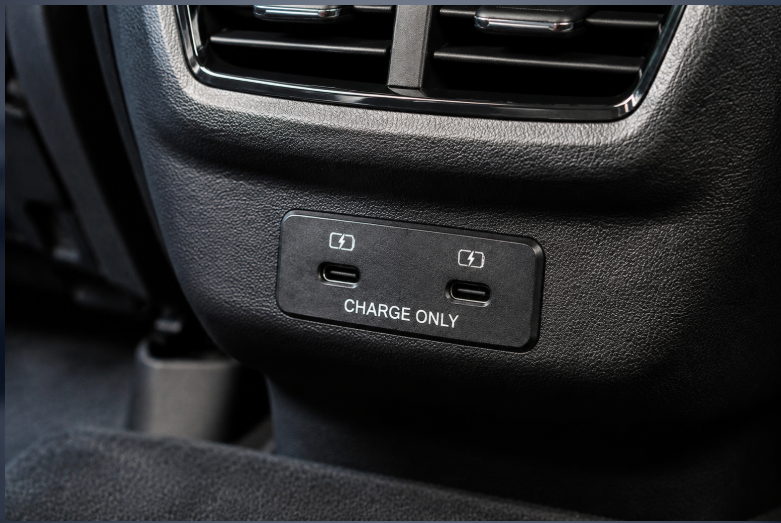
There is no mandatory global standard for how much power a car USB-C port must deliver. Instead, automakers select power levels based on vehicle trim, target market, and intended use, leading to three widely recognized de facto categories across the industry.
4.1 Basic Data-Focused Ports (5–15W)
This is the most common configuration in mainstream vehicles. These ports are designed primarily for CarPlay, Android Auto, and connectivity, with charging as a secondary feature. They typically deliver 5W to 15W of output — enough to maintain battery level during navigation, but not enough for fast top-ups. For example, many current Mercedes-Benz models have factory USB-C data ports that output roughly 10–12W, prioritizing stable infotainment connectivity over raw charging speed.
4.2 Standard Fast-Charging Ports (27–45W)
Increasingly common on newer premium and electric vehicles, these ports support USB PD at 27W to 45W, delivering charging speeds comparable to basic home chargers. They are often dedicated charge-only ports in rear seats or higher-trim center consoles, built explicitly for power delivery rather than data. For instance, higher trim levels of the Toyota RAV4 include 45W PD-compliant charge-only USB-C ports in the front cabin, alongside lower-power data ports for connectivity.
4.3 High-Power Fast-Charging Ports (65W and Above)
This is currently the least common tier, found primarily on high-end electric vehicle platforms. For example, Volkswagen’s upcoming NEUE KLASSE electric architecture specifies front-row USB-C ports rated to 65W and rear-seat ports at 30W per outlet — enough to charge lightweight laptops and larger accessories directly from the vehicle. As EV power systems grow more robust, this tier is expected to expand rapidly through the late 2020s.
5. Global Regional Certification and Compliance Requirements
Automotive electronic components must meet separate regulatory rules in each major market, covering safety, electromagnetic performance, and environmental standards.
5.1 European Union Requirements
In the European Union, automotive electronic components must meet CE safety and electromagnetic compatibility requirements. Automotive-specific products may also carry E-Mark certification to confirm compliance with EU vehicle safety and EMC regulations.
The EU common charger directive, which took effect for phones and small portable devices in December 2024 and will apply to laptops in April 2026, does not directly mandate vehicle port power standards. However, the near-universal shift to USB-C for consumer devices has made USB-C the default practical choice for all new car models sold in the EU market.
5.2 United States Requirements
In the United States, electronic accessories must meet FCC Part 15 regulations governing electromagnetic emissions. California has additional e-waste reduction policies that favor standardized, reusable charging interfaces over proprietary connectors. There is no federal mandate for vehicle charging port types, but consumer demand and industry alignment have driven broad USB-C adoption across all vehicle segments.
5.3 Japan Requirements
In Japan, automotive electronic products must comply with local radio law and electrical safety standards for automotive use. JASO automotive electronic technical standards also provide additional guidance for in-vehicle component design.
5.4 Common International Safety Certifications
Beyond regional rules, UL electrical safety certification and RoHS environmental material standards are widely recognized across global markets as markers of reliable, responsibly manufactured products.
6. Common Misconceptions About Automotive USB-C Standards
A few widespread misunderstandings lead to unnecessary frustration with in-car charging.
- Misconception: All USB-C ports support fast charging.
Reality: The USB-C shape only guarantees physical fit. Actual power and protocol support vary widely based on the vehicle’s design choices. - Misconception: Automotive-grade ports charge faster than consumer chargers.
Reality: The “automotive-grade” label refers to reliability, temperature tolerance, and EMC compliance — not maximum wattage. A 10W automotive-grade port is built to last longer in harsh conditions, but it will never charge as fast as a 65W consumer aftermarket charger. - Misconception: Low-power factory ports are just cost-cutting.
Reality: While cost is always a factor, the primary constraint is EMC standards and signal stability for infotainment features. Raising power on data ports would require heavier shielding and more complex engineering, which adds cost and can introduce connectivity reliability issues. - Misconception: Any USB-C cable will deliver the port’s full rated power.
Reality: Cables have their own power ratings. A basic 3A cable will cap a 65W port to 60W or lower, and poor-quality cables can reduce speed even further. - Misconception: Data transfer features do not affect charging power.
Reality: On most vehicles, data-enabled ports have intentionally limited charging power to reduce electromagnetic interference and protect signal stability for CarPlay and Android Auto.
7. Future Trends in Automotive USB-C Port Standards
As vehicle electrification accelerates and global charging interface rules evolve, automotive USB-C standards continue to develop in several key directions.
7.1 Power Capacity Upgrades
USB PD 3.1 with Extended Power Range (EPR), which supports up to 240W of power, is expected to appear in future automotive applications. This would allow USB-C ports to power larger devices like portable coolers, tools, and laptop-grade computing hardware directly from the vehicle.
7.2 Feature Integration
Higher-speed data transfer and video output capabilities will become more common on premium ports, supporting features like external display connectivity and high-speed media transfer directly from the vehicle interface.
7.3 Standardized Labeling
Industry groups are working on more standardized power labeling for factory ports, to reduce consumer confusion about charging speed and make it easier for drivers to understand what each port in their vehicle can do.
7.4 EV Platform Alignment
Electric vehicles have more robust low-voltage power systems, which makes higher-power USB-C ports easier to implement. As EV adoption grows, average port power levels across new vehicles will continue to rise.
8. Frequently Asked Questions
Q: Why do USB-C ports charge at such different speeds in different cars?
A: There is no mandatory global power standard for factory USB-C ports. Automakers set power levels based on the port’s intended purpose — data-focused ports are intentionally limited to maintain signal stability, while dedicated charge-only ports can deliver much higher speeds.
Q: How can I tell how much power my car’s USB-C port supports?
A: The most reliable method is to check your vehicle’s owner’s manual for exact output specifications. You can also use a USB-C power meter to measure real-world output while charging a device. As a general rule, ports used for CarPlay or Android Auto are almost always lower-power data ports.
Q: What is the difference between an automotive-grade USB-C port and a regular home USB-C port?
A: Automotive-grade ports are tested to survive much wider temperature ranges, constant vibration, and longer service lifespans. They also meet strict electromagnetic compatibility rules to avoid interfering with other vehicle electronics. Home chargers are designed for stable indoor environments and do not need the same level of durability.
Q: Why are most factory data-enabled USB-C ports so slow at charging?
A: High-power charging generates electromagnetic noise that can interrupt data transfer for CarPlay, Android Auto, or infotainment systems. To meet strict automotive EMC standards and maintain reliable connectivity, automakers deliberately cap charging power on data ports.
Q: Are USB-C port standards different for electric vehicles vs gasoline cars?
A: The underlying technical standards are the same, but EVs generally have more robust low-voltage power systems, so they are more likely to include higher-power USB-C ports and more ports overall.
Q: Will using a non-factory charging cable affect charging performance?
A: Yes. If the cable is not rated for the port’s full power output, it will act as a bottleneck and reduce charging speed. For high-power PD charging, always use a cable rated for at least the port’s maximum wattage.
9. Summary
Automotive USB-C ports are governed by a layered system of universal USB baseline standards, automotive-specific durability and EMC rules, and regional regulatory requirements. There is no single universal power standard for factory ports, which explains the wide gap in charging performance across different vehicles.
Data-focused ports, the most common type, prioritize stable connectivity and EMC compliance over raw charging speed, while dedicated charge-only ports and high-end EV ports can deliver much faster PD charging. The automotive-grade designation refers to long-term reliability and environmental resilience, not maximum charging speed.
As electric vehicle platforms become more powerful and global interface standardization continues, average USB-C power levels in new vehicles will keep rising. Understanding these layers of standards helps explain why factory ports perform the way they do, and makes it easier to evaluate whether your current in-car charging setup meets your needs.