
Ever pulled off a fuzzy fleece sweater in the dark and seen tiny blue sparks crackle across the fabric? Reached for a doorknob on a dry winter day only to get a sharp, surprising zap that leaves your finger tingling? Or spent 10 minutes trying to tame frizzy hair that sticks straight up after brushing with a plastic comb?
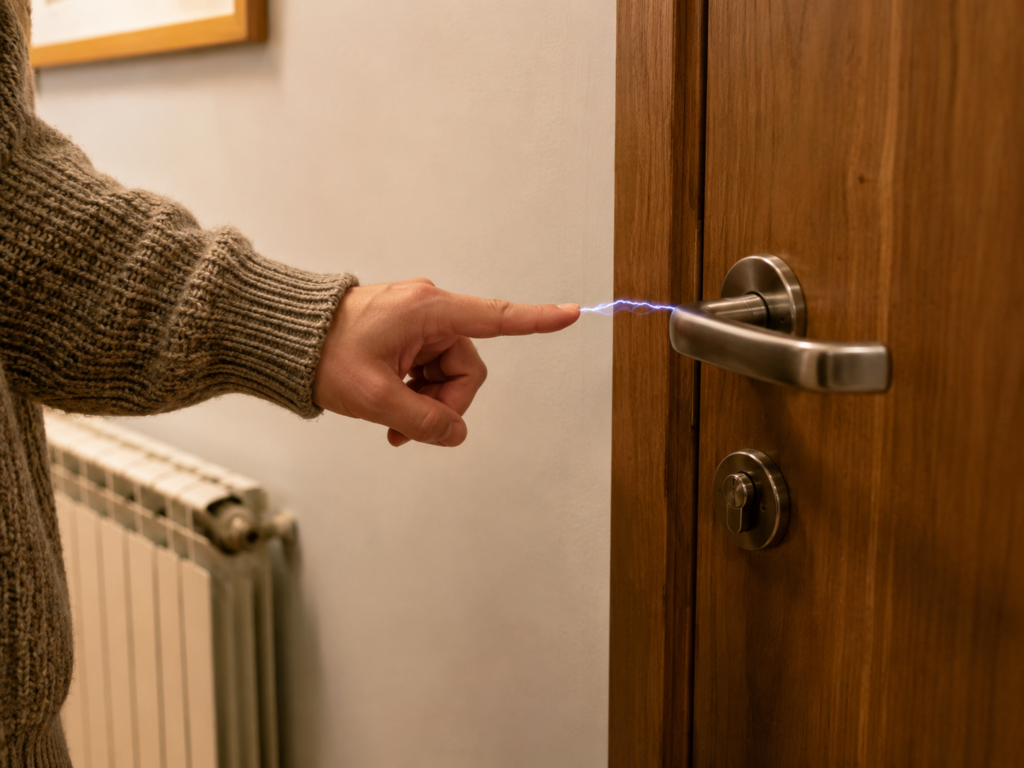
All of these annoyances are caused by static electricity. Most people write static off as a harmless (if frustrating) winter quirk, but its effects go far beyond a quick tingle. If you’re repairing electronics and touch an exposed motherboard or chip pin, even unnoticeable static can fry delicate components. In spaces with flammable vapors, combustible dust, or concentrated oxygen, a single static spark can act as an ignition source and cause serious accidents.
In this guide, we’ll break down the basics of how static forms, share practical protection tips for everyday home use, DIY electronics repair, and high-risk work environments, and explain when you need to follow strict safety protocols instead of winging it.
The Dangers of Static Electricity: From Minor Annoyance to Life-Threatening Risk
Static’s impact spans a huge range, from mildly annoying to deadly. We can break it down by severity:
4 Levels of Static Impact in Daily Life
| Severity Level | Common Examples | Key Details |
|---|---|---|
| Nuisance (no harm) | Lint sticking to clothes, frizzy hair, crackling sweaters | Most noticeable with synthetic fabrics, wool, and plastic items in dry conditions |
| Uncomfortable (no direct injury) | Shocks from doorknobs, elevator buttons, or car doors | Common in dry winters, heated/air-conditioned spaces, and when getting in and out of vehicles |
| Property Damage Risk | Discharge to exposed motherboards, chip pins, or connector contacts | Can cause immediate failure, or hidden latent damage that shows up months later |
| Life-Threatening Risk | Discharge near gasoline, flammable liquids, dust clouds, or oxygen-rich spaces | Requires specific fuel concentrations and enough ignition energy, but must be taken seriously — no cutting corners |
It’s worth noting that while daily static rarely causes direct physical harm, the surprise of a shock can lead to secondary injuries like falls, dropped objects, or fumbling dangerous items. People with heart conditions, older adults, and those with mobility issues should take extra steps to reduce static exposure.
Static Hazards in Professional Settings
Static isn’t just a home annoyance — it’s a major safety and cost concern in many professional fields:
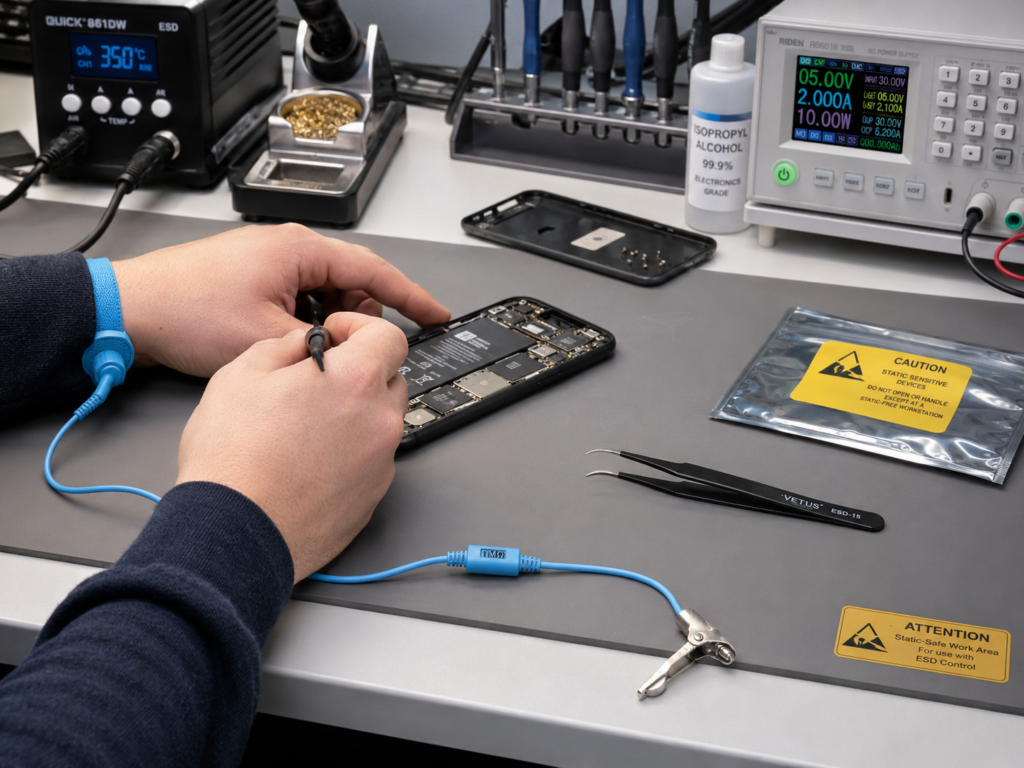
- Electronics manufacturing and repair: ESD can cause immediate component failure or latent damage that doesn’t show up for months, leading to high return and repair rates. If a device you fixed breaks a few months later, unregulated static during the repair is often the culprit.
- Chemical, oil, spray coating, and printing: Static generated by flowing liquids, spray mist, or moving plastic film can ignite flammable vapors or droplets, causing fires and explosions.
- Dust, mining, and grain processing: When combustible dust (grain, metal, coal, etc.) is suspended in air as a “dust cloud,” a single static spark can trigger a powerful explosion. Many accidents in grain elevators and metal fabrication shops are linked to static discharge.
- Healthcare and laboratories: Precision medical equipment in operating rooms, ICUs, and research labs can be damaged by static. In specialized environments with oxygen enrichment or flammable gases, ESD can also create direct safety risks.
Practical Static Protection Tips for Every Scenario
Now that you know how static works and why it matters, let’s cover actionable protection strategies for every situation, from daily home use to industrial workplaces.
Everyday Static Prevention for Home and Personal Use
You don’t need fancy gear to cut down on annoying static shocks at home. Here’s what to prioritize.
Quick Static Prevention Checklist
✅ Must-do steps:
- Discharge static painlessly before touching metal: Hold a key, coin, or other small metal object and touch it to a grounded metal surface (doorknob, stair railing, fridge handle) first. The spark will jump to the metal tip, not your finger.
- Keep skin moisturized in dry weather: Dry skin builds up more static, so use hand cream and body lotion regularly.
- Choose natural fabrics for close-fitting clothes: Cotton, modal, and silk generate far less static than polyester, nylon, or fleece.
💡 Recommended steps:
- Keep indoor humidity between 40% and 60% RH. A humidifier in dry months makes a huge difference.
- Cut back on high-static household items: Synthetic carpets, PVC tablecloths, and plastic chair pads all generate lots of static.
- Use anti-static sprays or laundry additives: Look for reputable products, and reapply as directed (they wear off over time).
❌ Skip these:
- Overpriced “anti-static jewelry” or bracelets with no grounding: There’s no reliable evidence these work.
- Extreme protection for regular device use: Your phone and laptop are built to handle normal static exposure — no need for special gear just to browse the web.
- Cordless anti-static wristbands: They don’t provide a reliable discharge path, so they can’t be used for serious ESD protection.
Home Static Safety Tips
- Static spikes sharply when humidity drops below 30% RH. On the flip side, humidity above 70% RH can cause mold growth, damage electronics, and warp wooden furniture — so 40-60% is the sweet spot.
- Three-prong outlets with proper grounding are for electrical safety, not static control. Never break off the ground pin on a plug to make it fit a two-prong outlet.
- Never connect anti-static devices to gas pipes, fire sprinkler lines, or unknown metal pipes. You could create a serious safety hazard, and these aren’t reliable ground points.
Protecting Your Phones and Laptops From Static
- Good news: Static damage is extremely rare during normal, closed-case use. Manufacturers build extensive ESD protection into every consumer device.
- The high-risk moments are when you open the case: cleaning dust, replacing a battery, upgrading RAM, or touching the motherboard, flex cables, chip pins, or gold connector contacts.
- Before any teardown: Power off the device completely, and disconnect the battery if it’s removable. Use a certified grounded anti-static wristband, an anti-static work mat, and static-shielding bags for loose components.
- Rule of thumb: If it’s shiny, gold, or looks like a delicate contact, don’t touch it with your bare fingers.
Gas Stations, Flammable Liquids, and Gas Leaks
Static ignition is rare, but the consequences are severe — so follow these rules:
- Before pumping gas, touch the static discharge pad on the pump first to discharge any built-up static on your body, then grab the nozzle.
- While pumping, don’t get in and out of the car repeatedly (this builds up static from sliding on the seat), don’t adjust fuzzy synthetic clothes, and don’t rub anything near the fuel tank opening.
- Never store gasoline, rubbing alcohol, or other flammable liquids in regular plastic bottles or buckets. Use approved metal containers or specialized anti-static plastic containers designed for flammable liquids.
- If you smell natural gas or propane in your home: Don’t turn lights on or off, don’t plug or unplug anything, and don’t use your phone inside. Open windows, close the main gas valve, leave the area immediately, and call your gas company or emergency services.
- Normal kitchen use doesn’t carry a static ignition risk. Static sparks only become a hazard if gas leaks and builds up to explosive concentrations.
ESD Protection for DIY Electronics Repair
If you like fixing phones, building PCs, or tinkering with circuit boards, proper ESD protection is non-negotiable. A single unnoticeable discharge can fry a $50 chip and ruin your project.
Electronics Repair ESD Checklist
✅ Non-negotiable steps:
- Fully power off the device before working on it. Disconnect the battery if it’s removable.
- Wear a corded anti-static wristband with a ~1MΩ current-limiting resistor, clipped to a reliable ground point (like the ground pin of a plugged-in outlet, or a properly grounded work mat).
- Never touch chip pins, gold connector fingers, or flex cable contacts directly with your fingers.
💡 Recommended steps:
- Use a grounded anti-static work mat on your desk.
- Use ESD-safe tools (screwdrivers, tweezers, etc.).
- Store sensitive components in static-shielding bags when not in use.
- Keep your workspace humidity between 40% and 60% RH, if possible.
❌ Never do this:
- Don’t use a cordless anti-static wristband as a replacement for a grounded one. They don’t work for ESD protection.
- Don’t assume lower resistance = better protection. Too low resistance increases electric shock risk.
- Don’t clip your wristband to gas pipes, random metal objects, or unconfirmed ground points.
Critical Safety Rule: No Grounded Wristbands for High-Voltage Work
A grounded wristband is great for low-voltage electronics repair, but it can be deadly if you’re working on high-voltage equipment.
- Never wear a grounded wristband when repairing devices connected to mains power, high-voltage circuits, CRT displays, or devices with un-discharged high-voltage capacitors (like old TV power supplies or microwave inverters).
- Before working on power supplies, appliances, or monitors, always confirm the device is unplugged and all capacitors are fully discharged. If you’re not sure how to discharge capacitors safely, leave the repair to a trained professional.
- The 1MΩ resistor in the wristband reduces shock risk from accidental contact, but it does not make high-voltage work safe. Always follow proper high-voltage safety protocols.
3 Core ESD Protection Principles
All good ESD setups follow these three rules:
- Equipotential bonding: Keep your body, workbench, tools, equipment, and the parts you’re working on at the same electrical potential. That way, there’s no voltage difference to cause a discharge.
- Grounded discharge: Conductive and static-dissipative materials (like anti-static mats and wristbands) let excess charge flow safely to ground, instead of building up.
- Ionization: Insulating materials like plastic, glass, and tape can’t discharge through grounding — charge gets stuck on their surface. For these, use ionizing fans or bars to produce charged air molecules that neutralize the static.
Building Your ESD Workspace
You don’t need a full lab setup for hobbyist repair, but these basics will cover most projects:
- Anti-static work mat: Look for a mat with a surface resistance in the static-dissipative range, and a built-in ground point. Make sure it comes with a ground cord.
- Anti-static wristband: Always choose a corded model with a 1MΩ current-limiting resistor.
- Ionizing fan (optional): Useful if you work with lots of plastic parts or insulating materials that build up static.
- ESD-safe tools: Soldering irons, tweezers, and screwdrivers labeled ESD-safe have dissipative handles that don’t build up charge.
- Static-shielding bags: Store loose chips, motherboards, and sensitive components in these to protect them from stray static.
Component Storage and Packaging
- Not all anti-static bags are the same. Static-shielding bags (usually metallic silver) block external static fields, making them the best choice for sensitive components. Regular pink anti-static bags only prevent static from building up on the bag itself — they don’t shield against external fields.
- Don’t store sensitive components in regular plastic boxes, styrofoam, or regular tape. These generate massive amounts of static.
- When in doubt, check the product specifications, not just the color. Look for test reports or compliance with ESD standards.
ESD Standards and Testing
For professional manufacturing, there are strict international standards for ESD control:
- ANSI/ESD S20.20: The main US standard for ESD control programs.
- IEC 61340 series: International standards for static control in various industries.
- IEC 61000-4-2: Standard for testing how well electronic products resist ESD.
For hobbyist repair, you don’t need to certify your workspace, but it’s a good idea to test your wristband and mat periodically with a surface resistance tester to make sure they’re still working.
Industrial and Medical High-Risk Settings: Follow Official Protocols
For industrial, healthcare, and laboratory environments, static protection is a serious regulated safety issue. Never rely on personal experience or DIY tips in these settings — always follow official industry standards and your workplace’s standard operating procedures (SOPs).
- Chemical, oil, and flammable liquid facilities: Follow standards like NFPA 77, API 2003, and IEC 60079, plus local safety regulations. Key measures include equipment grounding and bonding, static ground monitoring, controlled liquid flow rates, inert gas protection, explosion-proof electrical equipment, and proper ventilation.
- Textile, printing, and spray coating industries: Install static elimination bars or ionizing air knives at unwinding, rewinding, peeling, and spraying stations. Use anti-static treatments on raw materials and ground all equipment.
- Dust, mining, and grain processing: Control dust concentrations with ventilation and dust collection systems, ground all equipment, and use anti-static conveyor belts and pipes. Combine anti-static measures with explosion-proofing, regular cleaning, and monitoring — humidification alone isn’t enough.
- Healthcare and laboratories: Operating rooms, ICUs, and precision lab areas must follow medical electrical safety, anti-static, and explosion-proof requirements. Oxygen-rich environments lower the ignition energy threshold, so never use non-explosion-proof devices in areas with flammable disinfectants or specialized gases.
How to Test If Your Static Protection Is Working
You can’t judge static protection by whether you feel a shock. Here’s why, and what tools to use instead.
Why Daily “Tests” Aren’t Reliable
Two common home “tests” don’t tell you much:
- Crumpled paper test: Holding small bits of paper near a surface to see if they stick only shows if there’s obvious, high-level static. It can’t measure exact voltage, and it definitely can’t confirm if protection meets electronics or industrial safety standards.
- Human feeling: Most people only feel static shocks above 2-3kV, but many sensitive components can be damaged by discharges as low as 100V — way below what you can perceive. No shock doesn’t mean no risk.
For casual home use, these rough checks are fine. But for electronics repair or industrial settings, you need proper testing tools.
Professional Static Testing Tools
Different tools serve different purposes:
- Surface Resistance Tester: Measures the surface resistance of mats, flooring, packaging, and tools to confirm they fall within the correct conductive or static-dissipative range.
- Static Voltmeter / Field Meter: Measures the static voltage on an object’s surface, so you can see exactly how much charge is present and if your protection is working.
- Human Body Comprehensive Tester: Common at factory entrances, these test your anti-static wristband, anti-static shoes, and overall body grounding to make sure everything meets requirements before you enter the work area.
- ESD Simulator: Generates controlled static discharges to test how well electronic products hold up to ESD, usually per standards like IEC 61000-4-2.
Important safety note: Never test high-voltage equipment, live devices, or grounding systems unless you’re a trained professional. Improper testing can cause serious electric shock.
7 Common Static Protection Myths Debunked
There’s a lot of bad advice out there about static protection. Let’s bust the most common myths:
- Myth: Static only happens in winter.
Fact: Static can form any time there’s dry air, friction, or lots of insulating materials. It’s just more noticeable in winter because indoor heating dries out the air. You can even get static shocks in summer if you’re in an air-conditioned space with low humidity. - Myth: 100% cotton clothes never generate static.
Fact: Cotton generates far less static than synthetic fabrics, but it can still build up charge in extremely dry environments. It’s a better choice for reducing static, but it’s not a perfect solution. - Myth: Cordless anti-static wristbands work for electronics repair.
Fact: Cordless wristbands have no reliable path to discharge static. They cannot replace a grounded, corded wristband with a 1MΩ resistor for ESD protection. At best, they may reduce minor static discomfort for daily use — but they won’t protect your electronics. - Myth: Grounding everything fixes all static problems.
Fact: Grounding only works for conductive or dissipative materials. Insulators like plastic, glass, and tape hold charge on their surface and can’t discharge through ground. For these, you need ionization to neutralize the charge. - Myth: Lower resistance means better anti-static protection.
Fact: Too low resistance can increase the risk of electric shock if you accidentally touch a live part. The best anti-static materials fall in the static-dissipative range (not fully conductive, not fully insulating) per industry standards. - Myth: Metal objects are naturally static-safe.
Fact: Un-grounded metal can build up just as much charge as any other material, and it can produce strong, sudden discharges. Metal only helps with static control if it’s properly grounded. - Myth: Static from cooking can ignite natural gas in the kitchen.
Fact: The risk is extremely low during normal kitchen use. Static sparks only become an ignition hazard if gas leaks and builds up to explosive concentrations — which is a rare emergency situation, not a daily risk.
Frequently Asked Questions
Is static directly harmful to your health?
For healthy people, regular daily static discharges cause only brief tingling or stinging, with no lasting effects — no need to panic. The main risk is secondary harm: getting startled and falling, dropping something dangerous, or having a reaction to the surprise. People with heart conditions or other chronic health issues may experience discomfort from sudden shocks, so extra protection is a good idea for them.
What’s the fastest way to get rid of static on my body?
The quickest trick is to hold a small metal object (like a key, coin, or metal fork) and touch it to a grounded metal surface (doorknob, stair railing, metal fridge handle). The discharge will happen at the sharp metal tip, so you won’t feel a shock. This is just a temporary fix, though. To reduce static long-term, focus on moisturizing your skin, raising indoor humidity, and wearing fewer synthetic fabrics.
Do anti-static wristbands actually work?
It depends on the type. A corded wristband with a ~1MΩ current-limiting resistor, connected to a reliable ground point, is a proven, effective ESD protection tool for electronics repair. Cordless anti-static wristbands, on the other hand, have no reliable discharge path and cannot be used for professional ESD protection. At most, they may reduce minor daily static discomfort.
Is higher humidity always better for static control?
No. 40-60% RH is the ideal range: it reduces static effectively without causing other problems. Humidity above 70% RH can encourage mold growth, damage electronics, warp wooden furniture, and make spaces feel uncomfortably sticky.
Can static damage my phone or laptop?
The risk is extremely low during normal, closed-case use — manufacturers build robust ESD protection into every consumer device. But if you open the case to clean dust, replace parts, or work on the bare motherboard, chip pins, or connector contacts, the risk jumps significantly. Always use proper ESD protection when working on internal components.
Do I have to wear a wristband for DIY electronics repair at home?
If you’re just replacing a case, swapping a peripheral, or doing work that doesn’t touch delicate chips or contacts, you can skip it without much risk. But if you’re working on motherboards, chips, sensors, flex cables, or other precision components, we strongly recommend using a certified corded anti-static wristband, paired with an anti-static work mat and static-shielding bags. A single unperceivable static discharge can fry a component, and the repair cost will far outweigh the price of basic ESD gear.
What’s the purpose of the 1MΩ resistor in an anti-static wristband?
That’s a current-limiting safety resistor, with two key jobs. First, if you accidentally touch a live electrical part, the high resistor keeps the current at a very low, usually non-lethal level, reducing shock risk. Second, it lets static charge from your body discharge slowly and steadily, so a sudden current spike doesn’t damage sensitive chips. Always check for this resistor when buying a wristband — avoid cheap models that just use a plain copper wire with no resistance.
Final Takeaways
The core of static protection isn’t to eliminate static entirely — that’s impossible in real life. Instead, it boils down to three key goals: reduce how much charge is generated, prevent charge from building up to dangerous levels, and protect sensitive objects from discharge.
For everyday home use, preventing annoying shocks is simple: moisturize your skin, keep indoor humidity between 40-60% RH, wear fewer synthetic fabrics, and discharge static with a key before touching metal. That’s usually all you need.
If you do DIY electronics repairs, invest in a proper corded anti-static wristband, work mat, and static-shielding bags. Stick to the three core principles: equipotential bonding, grounded discharge, and ionization for insulating materials. Don’t rely on cordless wristbands, and never wear a grounded wristband when working on high-voltage live equipment.
For industrial, medical, and other high-risk special environments, never rely on personal experience or DIY hacks. Strictly follow industry standards and your workplace’s official safety procedures — that’s the only reliable way to stay safe and avoid costly damage.