
Introduction
For electric vehicle owners, in-car charging is more than a convenience — it is a core part of the travel experience. Unlike gasoline cars that rely on a small, engine-driven alternator, EVs draw auxiliary power from their high-voltage traction battery via a dedicated DC-DC converter, delivering far more stable and expandable power for personal devices.
Many EV drivers underuse this capability, or run into avoidable issues like slow charging, overheating, and safety confusion. This guide breaks down factory and aftermarket charging solutions, explains how EV auxiliary power works, and covers safety standards and scenario-based recommendations to help you build a setup that matches your daily needs.
Key Takeaways: 6 Critical Facts
- EVs use a DC-DC converter to step down high-voltage battery power to 12V, delivering more stable auxiliary power than gasoline vehicle alternator systems.
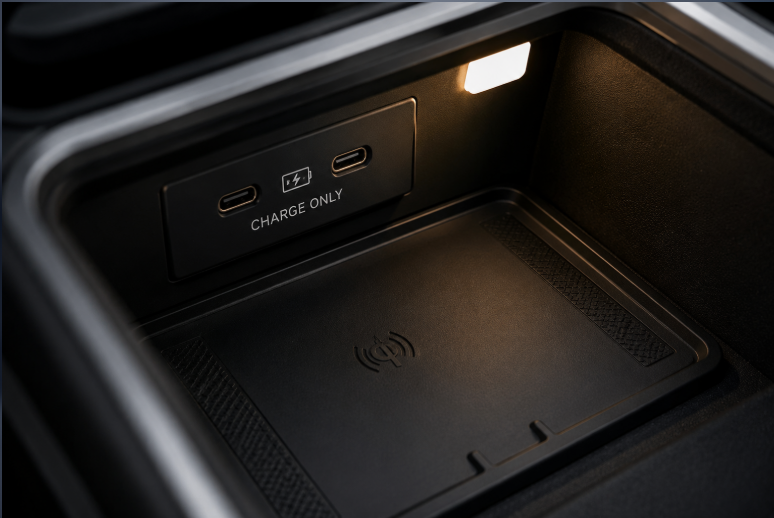
- Factory charging setups include wired USB ports and wireless pads, with power and protocol support varying widely by brand and trim level.
- The 12V accessory socket is the most universal upgrade point, supporting everything from basic fast chargers to high-power inverters.
- Standard low-power device charging has negligible impact on driving range; only high-power inverter use causes measurable range reduction.
- Extreme temperatures trigger battery thermal protection and slow charging speeds, so equipment and usage habits should account for climate conditions.
- Certified charging equipment and proper cable routing are the core safeguards against in-car electrical hazards.
1. Basics of In-Car Charging for Electric Vehicles
1.1 Definition and Core Use Cases
In-car charging refers to systems and accessories that power portable electronic devices inside the passenger cabin. Common use cases include daily smartphone charging on commutes, powering laptops and travel gear on road trips, and running lifestyle accessories like portable coolers on camping journeys.
1.2 Core Differences Between EV and Gasoline Vehicle Power Systems
Gasoline vehicles power cabin accessories via a belt-driven alternator, whose output fluctuates with engine speed. EVs have no alternator; instead, a DC-DC converter draws steady power from the 400V–800V traction battery and converts it to stable 12V supply.
This design delivers two key benefits: consistent power whether the vehicle is moving or parked, and higher total auxiliary capacity for larger devices. All cabin ports and accessories run on the isolated 12V system, not directly from the high-voltage battery, for passenger and device safety.
1.3 Two Main Categories of Charging Solutions
- Factory-installed solutions: Integrated into the vehicle during production, with full automotive-grade reliability testing and seamless interior fit.
- Aftermarket upgrade solutions: Added by the vehicle owner, offering higher power, more ports, and customizable placement at a lower cost.
2. Factory-Installed In-Car Charging Solutions
2.1 Wired Charging Port Systems
Most modern EVs include a mix of USB-A and USB-C ports across front and rear seating areas, with USB-C as the dominant standard on newer models.
Ports fall into two functional categories:
- Data-enabled ports: Support CarPlay, Android Auto and media transfer, with intentionally limited power output to reduce electromagnetic interference with infotainment systems.
- Charge-only ports: No data capability, but deliver significantly higher power for fast charging.
Power levels vary by trim. Entry-level models typically output 10W–15W per port, while premium EVs offer much higher capacity: some six-seat electric models equip 100W USB-C ports across all seating rows, enough to charge lightweight laptops directly.
2.2 Built-In Wireless Charging
Nearly all new EVs include at least one center-console wireless charging pad built to the Qi standard. Most factory pads deliver 5W–15W, with real-world speeds often lower due to thermal limits and alignment requirements.
Wireless charging offers cable-free convenience, but is less efficient than wired charging and generates more heat. It works well for maintaining battery level on short drives, but is slower for fast top-ups on long trips.
2.3 Regional Configuration Differences
- European Union models: Driven by the common charger directive, nearly all new EVs use USB-C as the primary port, with higher average power ratings and clear power labeling per ecodesign rules.
- United States models: Most include a mix of USB-A and USB-C ports to support older devices, with wireless charging standard on mid and high trims.
- Japanese market models: Typically include both wired USB ports and Qi wireless charging as standard, with slightly more conservative power ratings than Western premium trims.
3. Aftermarket Upgrade In-Car Charging Solutions
3.1 Basic Portable Upgrade: 12V Cigarette Lighter Expansion
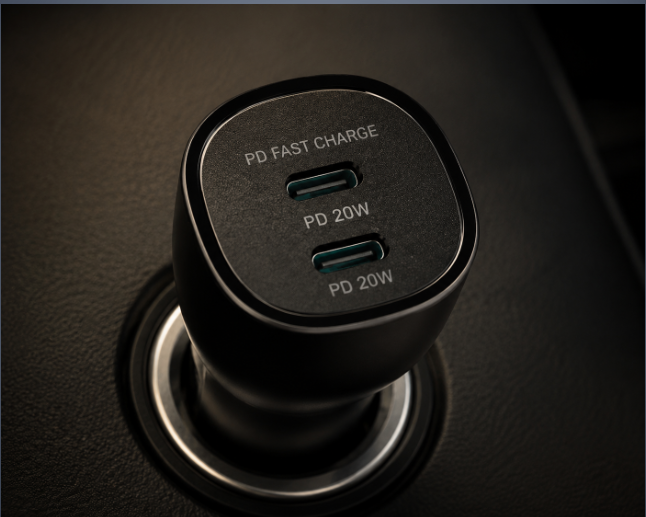
The 12V accessory socket is the most universal upgrade point, with three common configurations:
- Single-port PD/PPS fast chargers: Compact and affordable, delivering 25W–65W for high-speed smartphone and tablet charging.
- Multi-port USB-C/A hybrid chargers: 2–4 ports for simultaneous multi-device charging, with shared total power output.
- Multi-port charging docks: Larger units with extended cable reach, designed for easy rear-seat access for families and group travel.
3.2 Experience Upgrade: Add-On Wireless Charging
Two popular aftermarket options exist for vehicles without factory wireless charging:
- Magnetic wireless charging mounts: Attach to air vents or dashboards, compatible with MagSafe and Qi2 devices for reliable charging on bumpy roads.
- Adhesive wireless charging pads: Install inside center console storage for a more factory-like appearance.
Newer Qi2.2 models support up to 25W output, significantly faster than older 15W designs.
3.3 High-Power Expansion: Inverter Solutions
Power inverters convert 12V DC to household 110V/230V AC for devices that require wall-plug power, such as full-size laptops and portable coolers. There are two main types:
- Modified sine wave inverters: Lower cost, but produce stepped power that works only for simple loads like chargers and lights. They can cause buzzing or overheating in sensitive electronics and motor-driven devices.
- Pure sine wave inverters: Deliver clean power identical to household outlets, working silently and reliably with all device types. They are the recommended choice for regular use and sensitive equipment.
When selecting an inverter, match the continuous power rating to your most demanding device, and never exceed the 12V socket’s current limit — typically 10A–15A (120W–180W) for most passenger vehicles.
3.4 Custom Expansion: Dedicated Interface Modules
For a factory-matching appearance, model-specific upgrade parts are available for popular EVs: rear-seat charging expansion modules that replace blank trim panels, and armrest-integrated charging upgrades for hidden, tidy cable management.
4. Matching Charging Solutions for Common Devices
4.1 Portable Consumer Electronics
- Smartphones: iPhones and Google Pixel devices charge fastest with 20W–30W USB-C PD chargers or Qi2 magnetic wireless chargers. Android flagships with PPS support will charge noticeably faster with a PPS-compatible car charger.
- Wearables and audio devices: Smartwatches and wireless earbuds draw very low power, and work at full speed on any standard USB port. No high-power port is required.
4.2 Tablets and Laptop Computers
- Thin and light laptops: 45W–65W USB-C PD chargers or high-power factory ports support full-speed charging, ideal for working on road trips.
- High-performance laptops: Gaming and workstation models with 100W+ power demands will charge slowly or not at all from standard car chargers. A pure sine wave inverter paired with the original power adapter is the most reliable solution.
4.3 Automotive Lifestyle Devices
- Always-on devices: Dash cams and air purifiers draw minimal continuous power, and work with any standard 12V or USB source. Many EVs have dedicated always-on ports for parked dash cam use.
- Medium-power devices: Portable coolers and small camping appliances under 120W can run directly from the 12V socket. Higher-wattage models require an inverter, and extended use will consume a small amount of traction battery range.
5. Customized Charging Solutions for Typical Scenarios
5.1 Long Road Trips
For multi-hour drives, use a dual-port PD charger with independent power allocation for consistent full-speed charging for both driver and passenger. For rear passengers, use a multi-port hub to avoid passing cables back and forth.
Spread high-power devices across different sockets to reduce heat buildup and maintain stable speeds. Most modern EVs easily handle 4–6 simultaneous charging devices with ample DC-DC converter overhead.
5.2 Group Travel With Multiple Passengers
Prioritize setups that put a port within reach of every seat, rather than clustering all ports up front. Rear-seat expansion modules and seat-back mounted chargers work well for 3+ passengers.
Route cables along door sills and under floor mats, and secure them with cable clips to avoid tangles and footwell hazards. Good cable management improves both appearance and safety.
5.3 Extreme Temperature Environments
- High heat: Direct sunlight can raise dashboard temperatures above 50°C, triggering thermal protection that cuts charging speed by half or more. Keep devices out of direct sun, use cabin airflow to cool the charging area, and prefer wired charging over wireless on hot days.
- Cold weather: Lithium-ion batteries charge more slowly at low temperatures until they warm up. This is normal battery protection behavior, not a charger fault. Speeds will return to normal as the cabin warms.
6. Safety Standards and Protection Mechanisms
6.1 EV Low-Voltage Power System Safety Basics
EV 12V systems are fully isolated from the high-voltage traction battery via the DC-DC converter, with built-in overcurrent, short-circuit and over-temperature protection that cuts power automatically if a fault occurs.
The 12V auxiliary battery powers the vehicle’s control systems and wake-up functions, even when the high-voltage system is asleep. A fully drained 12V battery can prevent the vehicle from starting, even with a full traction battery. Avoid running high-power accessories for extended periods with the vehicle turned off.
6.2 Required Safety Certifications for Charging Equipment
- CE certification (European Union): Mandatory for electronic products sold in the EU, verifying low-voltage safety, electromagnetic compatibility and RoHS compliance.
- FCC certification (United States): Mandatory for radio-frequency emitting devices, ensuring chargers do not interfere with vehicle radio, navigation or safety systems.
- UL certification: Widely recognized North American electrical safety standard, with rigorous testing for fire, shock and electrical fault hazards.
- RoHS standard: Restricts hazardous substances like lead and mercury in electronics, required for the EU and many global markets.
6.3 Daily Usage Safety Guidelines
Most EVs keep USB ports active for 10–30 minutes after exit, then shut off automatically to protect the 12V battery. Extended accessory power mode is available on many models, but should be used sparingly.
Inspect cables and chargers periodically for fraying, cracking or bent pins. Never run cables under floor mats or seat cushions where they can trap heat, and never block cooling vents on inverters or high-power chargers.
7. Selection and Installation Guide
7.1 Core Selection Principles
- Match power ratings to your actual devices. A basic 25W dual charger is sufficient for phones and earbuds; there is no benefit to overbuying unused wattage.
- Choose form factors that fit your vehicle’s interior layout. Vent mounts work well for navigation use, while console pads are better for stored devices.
- Prioritize moderate future-proofing. A slightly higher-power charger will work with newer, faster devices for years to come.
7.2 Installation and Cable Routing Guidelines
- Plug-in 12V chargers require no installation. Tuck cables along dashboard edges and secure with adhesive clips for a clean look.
- Never run cables across the driver’s footwell or near pedals.
- Avoid running cables through moving parts like seat tracks or door hinges.
- Leave small slack at both ends to avoid strain when seats or steering columns are adjusted.
Hidden wiring behind trim panels is not recommended for most owners, as it can damage interior parts, interfere with airbags or create electrical faults. Use a qualified automotive electrician for permanent wiring work.
7.3 Verifying Charging Performance
Use a USB power meter to measure real-world output while charging a nearly empty device. A good charger will hold its rated voltage and current consistently under load.
Also test stability on bumpy roads. Frequent cutouts usually indicate a loose cable or mount connection. Excessive heat during use may mean the charger is undersized or has poor thermal design.
8. Frequently Asked Questions
Q: Does in-car charging drain the EV’s high-voltage traction battery?
A: Indirectly, but normal use has negligible impact. All cabin accessories run on the 12V battery, which is topped up by the DC-DC converter drawing small amounts from the traction battery. Charging phones consumes too little power to measurably reduce range. Only high-power inverters running large appliances cause noticeable range loss.
Q: Why do factory USB ports on EVs often have higher power than on gasoline cars?
A: EVs have a far more capable auxiliary power system. Gasoline car alternator output varies with engine speed, limiting accessory power. EV DC-DC converters deliver consistent, high-capacity 12V power regardless of vehicle state, making higher-power USB ports more practical and reliable.
Q: Will using a high-power inverter reduce my electric driving range?
A: Yes, but the effect is usually small. A 100W laptop charger running continuously uses roughly 0.1 kWh per hour, reducing range by less than 1 kilometer per hour. Larger devices have a bigger impact, but still remain small relative to total battery capacity.
Q: Do USB ports stay powered when the vehicle is turned off?
A: This varies by model. Most EVs keep ports active for 10–30 minutes after exit, then shut off automatically to preserve the 12V battery. Check your owner’s manual for exact behavior, and do not leave high-power devices running unattended for hours.
Q: Is it normal for factory wireless charging pads to get very warm?
A: Mild warmth is normal, as wireless charging is less efficient and generates waste heat. If the pad or phone becomes too hot to hold comfortably, thermal protection is active and charging speed has been reduced. This is especially common in direct sunlight. Use wired charging for faster, cooler performance on hot days.
Q: Is it safe to add extra charging ports myself?
A: Plug-in accessories that use the existing 12V socket are completely safe and require no modification. Permanent wiring changes, splicing into vehicle harnesses, or hard-wired inverters carry more risk and should follow manufacturer guidelines. Consult a qualified automotive electrician if you are unsure.
9. Summary
Electric vehicles deliver significantly stronger in-car charging capability than gasoline vehicles, thanks to their high-voltage battery and dedicated DC-DC converter architecture. Factory ports and wireless pads cover basic daily needs, while aftermarket upgrades can expand support for multi-device fast charging, laptop power and travel appliances.
All standard in-car charging runs on the fully isolated 12V auxiliary system. Normal smartphone and tablet charging has effectively no impact on driving range; only high-power inverter use causes measurable range consumption.
When selecting equipment, prioritize region-appropriate safety certifications, match power ratings to your actual devices, and follow good cable routing practices for a tidy and safe cabin. You do not need the highest-wattage gear available — the best solution is the one that reliably fits your travel habits and the devices you actually carry.