
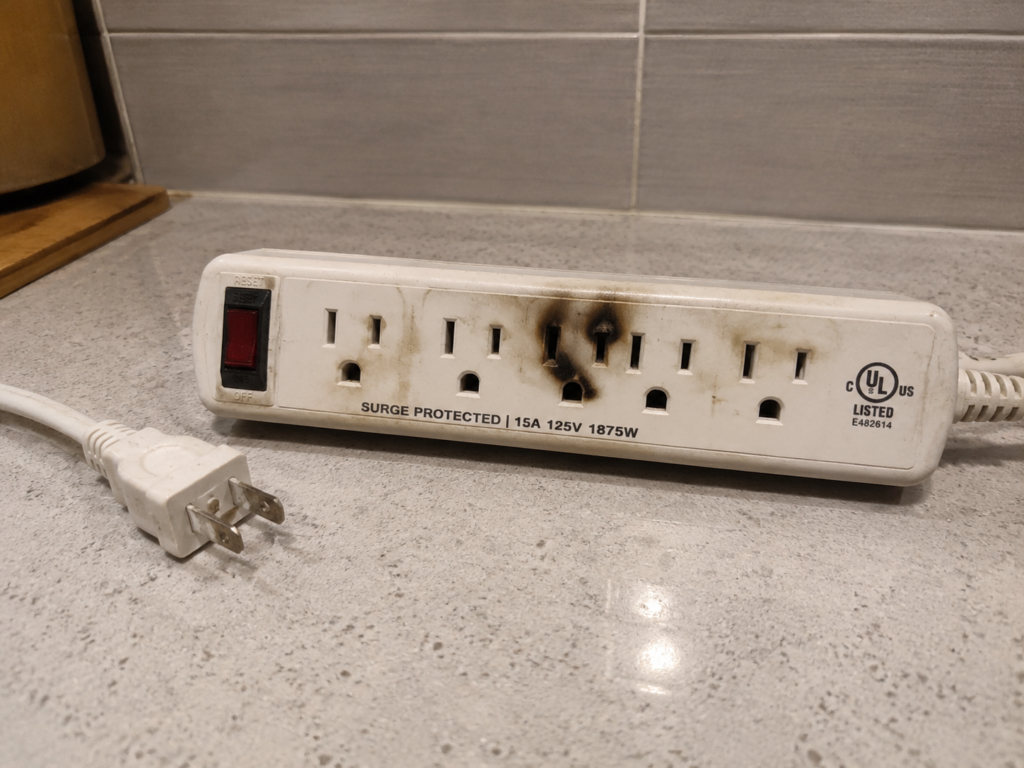
Have you ever noticed the plastic around your kitchen power strip outlets turning dark after a few months, or felt a faint tingle when you touch the casing? Or picked up a budget phone charger that starts smelling burnt and sparks when you plug it in? Most people write this off as “cheap build quality,” but these issues almost always trace back to two invisible safety metrics: creepage distance and clearance.
Whether you’re a regular shopper picking out appliances, a homeowner upgrading kitchen or bathroom electrical systems, an electronics DIYer laying out PCBs, or a seller shipping products internationally that needs to pass safety certifications, understanding these two concepts will help you avoid electrical hazards and compliance headaches. If these distances are too small, minor issues like tingly casings, odd odors, discolored plastic, frequent tripped breakers, or accelerated insulation breakdown are common. In severe cases, you get air breakdown, arcing, short circuits, electric shock, or even electrical fires. For product makers, non-compliance can lead to failed certification audits or full product recalls.
This guide covers low-voltage home appliances, chargers, PCBs, and everyday DIY safety logic. Always reference the latest product standards for your target market for exact compliance values—do not rely on random numbers you find scattered across the internet.
Core Definitions: What Are Creepage Distance and Clearance?
These two terms sound abstract at first, but they both describe “safety distances between live parts, or between live parts and touchable surfaces.” The only difference is the path electricity takes.
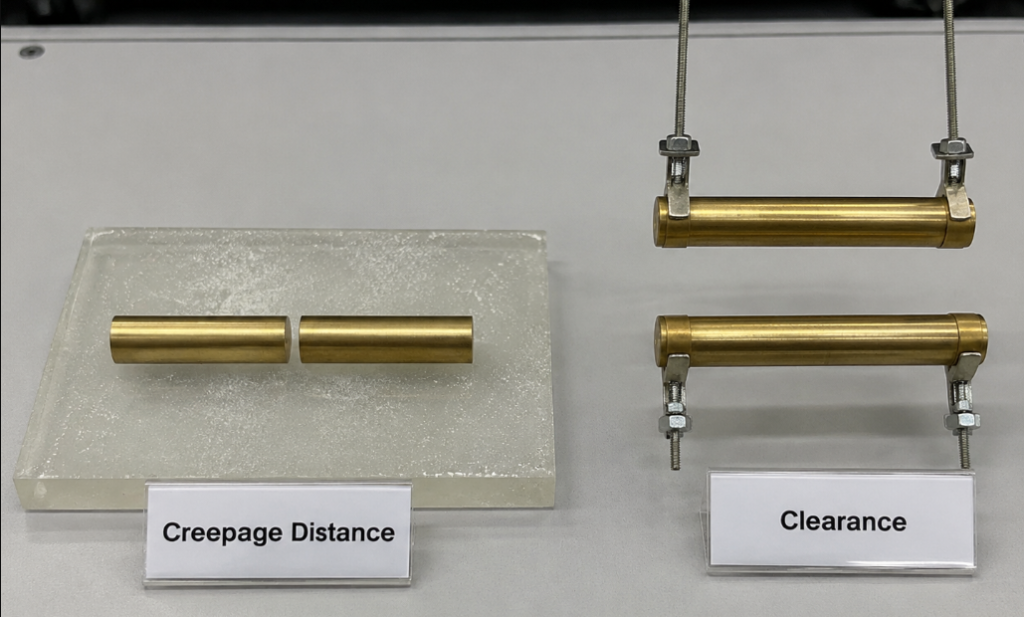
Creepage Distance: The Shortest Path Along Insulation Surfaces
Think of it this way: your plastic power strip has metal contacts separated by plastic, which is normally insulating. But if that plastic gets coated in kitchen grease, dust, and bathroom humidity, electricity won’t stay confined to the metal contacts—it will “creep” along the dirty, moist surface of the plastic, causing small current leaks. That shortest path along the insulation surface is creepage distance.
By formal definition, creepage distance is the shortest distance measured along the surface of an insulating material between two conductive parts, or between a conductive part and an accessible surface. It protects against surface leakage, tracking (when electrical current slowly carbonizes the insulation surface, creating a conductive path that worsens over time), and long-term insulation degradation leading to short circuits.
Clearance: The Shortest Distance Through Air
If creepage distance is electricity “walking along the ground,” clearance is electricity “jumping through the air.” We all know lightning forms when high voltage breaks down the air between clouds and the ground. The same thing happens inside electronics: if two live metal parts are too close together, a sudden voltage spike (like a surge from lightning, or the inrush when you plug in a high-power device) can cause electricity to jump across the air gap, creating a spark or arc. That shortest distance through air is clearance.
By formal definition, clearance is the shortest distance measured through air between two conductive parts, or between a conductive part and an accessible surface. It protects against air breakdown, arc discharge, and short circuits or electric shock from transient overvoltages.
Common Test Locations
These distances are evaluated at nearly every insulated point in an electrical device, not just one spot. Key check locations include:
- Between line (L) and neutral (N) conductors, between primary (mains-side) and secondary (low-voltage output) circuits, and between live parts and metal enclosures
- Between PCB copper traces, solder joints, connector terminals, and switch contacts
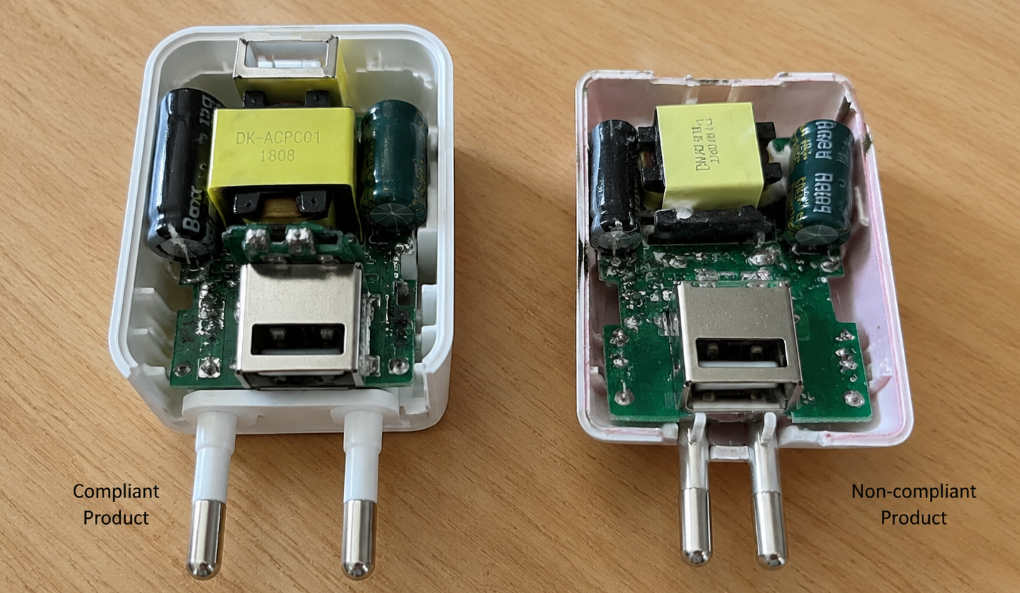
- Inside power adapters, power strip internals, appliance control boards, and industrial terminal blocks
Quick Comparison: Creepage Distance vs. Clearance
It’s easy to mix these two concepts up, but their core difference lies in the current path, which leads to different influencing factors and failure modes. Use the table below for a fast reference:
| Comparison Category | Creepage Distance | Clearance |
|---|---|---|
| Current path | Travels along insulation surfaces (“ground route”) | Travels through air (“air jump”) |
| Primary risks | Surface leakage, tracking, long-term insulation wear | Air breakdown, arcing, instantaneous short circuits |
| Key influencing factors | Working voltage, pollution degree, CTI/material group, surface geometry | Rated impulse voltage, overvoltage category, altitude, electrode shape |
| Failure pattern | Gradual, cumulative degradation over time | Sudden, instantaneous breakdown |
A common rule of thumb: in many low-voltage products used in typical environments, required creepage distance is often equal to or larger than required clearance. But this is not a hard rule—you cannot assume creepage is always bigger. Actual values are set by standard tables and product operating conditions; at the same voltage, different pollution degrees, material groups, insulation types, and product standards can lead to very different requirements.
If you want an easy way to remember: Creepage follows surfaces—it hates dirt, moisture, and low-quality materials. Clearance crosses air—it hates high voltage, surges, and high altitude.
What Determines Required Safety Distances?
Safety distances are not one fixed number—they depend on a whole set of conditions. Creepage and clearance have different influencing factors, so we’ll break them down separately.
Factors Affecting Creepage Distance
Since creepage follows insulation surfaces, anything that reduces surface insulation strength will increase required creepage distance.
Working Voltage
The higher the working voltage, the higher the surface leakage risk, so the more creepage distance you need. Think of it like a dam: higher water needs a thicker, longer dam wall.
Pollution Degree (PD)
Pollution degree describes how “dirty” the insulation surface is expected to get. Dirtier surfaces form conductive paths more easily, so they require more creepage distance. International standards define 4 pollution degrees:
- PD1: Ultra-clean environments, like components inside fully sealed, clean enclosures with almost no contamination.
- PD2: Typical dry indoor environments like living rooms and offices, with occasional non-conductive dust that doesn’t significantly reduce insulation.
- PD3: Environments with higher contamination, like kitchens, bathrooms, and standard industrial workshops, with grease, moisture, and dust.
- PD4: The harshest environments, like outdoor exposure or industrial settings with constant conductive dust (e.g., coal mines, grinding facilities).
Material Group and CTI
Beyond surface dirt, the insulation material’s own resistance to damage matters too. This is measured by the Comparative Tracking Index (CTI). Put simply, the higher the CTI, the less likely the material surface is to develop carbonized tracking marks from electrical current, even with minor surface contamination.
In the IEC standard system, materials are grouped by CTI. Better material groups (higher CTI) allow smaller required creepage distances. For example, high-quality flame-retardant engineering plastics can have a CTI over 600V, while cheap recycled plastic might not even hit 175V—making it very risky for use in 120V/240V products.
Insulation Surface Geometry
Many designers add ribs or grooves to insulation surfaces to lengthen the creepage path—essentially making electricity “take the long way around” so you don’t have to make the whole product bigger. But note: not every random groove or rib counts. If a slot is too narrow or too shallow, it doesn’t count toward creepage distance per standard measurement rules—you can’t just cut a random slot to meet requirements.
Coatings, Potting, and Conformal Coating
A lot of DIYers brush conformal coating on their PCBs and assume it counts as insulation, so they can shrink creepage distances. In reality, standard conformal coating and even the green solder mask on PCBs don’t count as safety-rated insulation on their own. Their thickness, adhesion, and long-term insulation performance aren’t certified for safety, and manufacturing consistency can vary widely—they can peel or degrade over time. Only coating and potting systems that have dedicated material certification and controlled manufacturing processes, meeting relevant standards, can be evaluated for insulation performance per the rules.
Factors Affecting Clearance
Since clearance is measured through air, anything that reduces air’s insulation strength will increase required clearance.
Rated Impulse Voltage and Overvoltage Category
A lot of people think clearance only depends on working voltage—like 240V just needs a 240V-rated gap. That’s wrong. Clearance is mainly designed to withstand momentary high voltages (surges/impulses). For example, a lightning strike on the grid, or the inrush when you plug in a high-power appliance, can send voltage spiking to thousands of volts. If the air gap is too small, it will break down and spark immediately.
How do you determine the required impulse voltage? That depends on the Overvoltage Category (OVC), which describes where your device sits in the power distribution system. The closer a device is to the outdoor utility feed, the higher the overvoltage risk, and the more clearance it needs. For example, a home’s electrical panel is closer to the utility feed, so it has a higher overvoltage category. A regular home appliance plugged into a wall outlet has a lower overvoltage category, and low-voltage circuits inside a device are lower still. That’s why a 240V circuit breaker in a panel needs far more clearance than a 240V phone charger.
Altitude
The higher the altitude, the thinner the air, and the worse its insulation performance—so the same gap is easier to break down. If a product will be used at high altitude (like the Rocky Mountains in the US, the Andes, or the Tibetan Plateau), you have to increase clearance per standard rules. Creepage distance, since it follows solid surfaces, is generally not affected by altitude.
Electrode Shape and Assembly Tolerances
An often-overlooked factor is the shape of metal parts. If a live metal tab has sharp edges or burrs, or a PCB solder joint has a pointed tip, the electric field concentrates at those sharp points—like a lightning rod—making air breakdown more likely. On top of that, parts can be misaligned during assembly, wires can shift, or components can deform over time, so the actual clearance will be smaller than the design value. Always build in extra margin during design.
Air Conditions
The state of the air itself matters too. Extremely high humidity, condensation, or high levels of conductive dust will reduce air’s insulation strength. In those cases, you need to do additional evaluation per product standards, instead of just using standard indoor values.
How to Check Compliance: Tips for Consumers and Professionals
Now that you understand the basics, you’re probably wondering: how do I know if a product has adequate safety distances? Regular consumers don’t need to take products apart, and professionals need to follow specific measurement rules.
Risk Identification for Regular Consumers
You don’t need to know how to take precise measurements—just follow these simple tips to avoid most risks:
- Check certifications and labeling: Different markets have different mandatory or widely recognized safety certifications. For the US, look for UL, ETL, or CSA marks from OSHA-recognized NRTLs (Nationally Recognized Testing Laboratories) for products like appliances, power strips, and chargers. For the EU, look for CE marking with supporting technical documentation. For China, look for the CCC mark for products in the mandatory certification catalog. Of course, marks can be faked—always buy from reputable retailers and trusted brands.
- Match the product to its environment: Don’t use standard indoor power strips or outlets in kitchens, bathrooms, balconies, or outdoors. These damp, dusty, greasy spaces require dedicated splash-proof or dust-proof products, like outlets with an IP rating. For high-altitude areas, look for products explicitly rated for high-altitude use.
- Check build quality clues: Look for smooth, burr-free plug pins, flame-retardant markings on the casing, no loose parts when you shake it, no discolored outlets, and no strong chemical plastic smells. These details don’t guarantee safety compliance, but they’re a good sign of a manufacturer that pays attention to quality.
Important note: Visual checks only flag potential red flags—they can’t replace professional safety testing and certification. Even a product that looks solid could have cut corners internally.
Pre-Measurement Checks for Professionals
If you’re an electronics DIYer, product designer, or quality engineer who needs to evaluate these distances, you need to confirm a few key parameters first—otherwise your measurements are useless:
- Target market and product standard: Are you following IEC/EN standards for the EU, UL standards for North America? Is the product a home appliance or IT equipment? Different product categories have different standard requirements.
- Electrical parameters: Working voltage, rated impulse voltage, overvoltage category.
- Environmental and material parameters: Pollution degree, material CTI/material group, operating altitude.
- Insulation type: What is the insulation for? Functional insulation only exists to make the circuit work properly and doesn’t protect against shock. Basic insulation is the first line of shock protection. Supplementary insulation is the second line. Double insulation combines basic and supplementary insulation. Reinforced insulation is a single layer that provides the same protection as double insulation. Different insulation types have very different distance requirements—for example, reinforced insulation usually requires roughly twice the distance of basic insulation.
- Measurement tools: For basic measurements, you can use calipers, feeler gauges, or creepage distance test cards. For higher precision, use vision measuring systems or coordinate measuring machines (CMMs).
Creepage Distance Measurement Steps
The core of measuring creepage distance is “finding the shortest path along the surface.” The general process is:
- Identify the two points you need to evaluate—for example, a live mains contact and an accessible metal enclosure, or primary and secondary side solder joints.
- Trace the shortest possible path along the surface of the insulating material—this is not a straight line; it follows all the curves, grooves, and ridges of the surface.
- When you encounter grooves, slots, ribs, or barriers, apply the measurement rules from the relevant standard. For example, very narrow slots are measured straight across, not around the edges, so you can’t just cut a tiny slot to artificially increase creepage distance.
- Measure multiple locations and use the smallest value—because if even one spot is too small, there’s a safety risk.
- Always build in engineering margin. Account for soldering errors, assembly tolerances, and long-term aging. Most designers recommend a 10% to 20% (or larger) margin instead of designing right to the minimum required value.
Clearance Measurement Steps
Measuring clearance is simpler in concept, but you have to make sure you’re finding the actual minimum distance:
- Find the closest air path between two conductive parts—remember, this is through air, so it can’t pass through solid insulation.
- Measure that shortest distance, but don’t just measure the ideal, as-designed position.
- Check for worst-case positions: solder spikes, burrs, misaligned terminals, or wires that can shift when the product is moved or vibrated. If a wire can wiggle closer to another live part, you have to measure the distance in that shifted position.
- If the product will be used at high altitude or in special environments, apply the standard correction factors to get the final required value.
Common Measurement Mistakes
A lot of new designers and DIYers make these errors:
- Measuring creepage distance as a straight line with calipers, instead of tracing along the surface around grooves and ribs.
- Ignoring the effect of solder joints, burrs, or terminal misalignment. The copper trace spacing might look fine on paper, but a pointed solder blob or a crooked terminal can make the actual minimum distance too small.
- Grabbing a random “240V = 3mm creepage” table from the internet and using it for every product, environment, and insulation type. This is a recipe for compliance failures.
- Designing right to the minimum standard value with no margin. Even a tiny variation in mass production can make units non-compliant, and aging over time can create safety hazards. It’s a very risky practice.
Standards and Reference Values: Don’t Memorize Numbers—Learn to Look Up Conditions
A lot of people finish reading and ask: “Okay, so how big does the distance actually need to be?” There’s no one-size-fits-all answer, because requirements vary wildly by use case and product. The key is knowing how to look up standards, not memorizing random numbers.
Major Standard Systems
Different industries and markets have different standards. Here are the most common ones:
- General foundation standards: IEC 60664-1 is the international standard for insulation coordination in low-voltage systems. The North American equivalent is UL 840. These are the base standards that all product-specific standards build on.
- Home appliances: The IEC 60335 series (EN 60335 in the EU) covers household appliances. Products like refrigerators, washing machines, and extension cords fall under this category.
- IT and audio/video equipment: The unified standard is now IEC 62368-1 (EN 62368-1 in the EU), which replaced the older IEC 60950 (IT equipment) and IEC 60065 (audio/video) standards. Phones, laptops, and chargers all fall under this category.
- Industrial control, power distribution, solar, and other specialty fields: These have their own product standards, like IEC 61439 (low-voltage switchgear) or IEC 62109 (solar inverters). Always use the standard that matches your specific product.
Understanding Certification Marks
When talking about standards, it’s important to clarify what common certification marks actually mean, since a lot of people mix them up:
- CCC (China Compulsory Certification): A mandatory certification for products in the CCC catalog sold in China. It requires third-party product testing and factory inspections.
- CE marking: A European Union conformity mark. For most products, manufacturers can self-declare compliance with relevant EU directives/regulations and affix the CE mark. Many manufacturers do work with third-party labs for testing, but CE itself is not a mandatory third-party issued certification—don’t assume a CE mark means a third party tested the product.
- UL, ETL, CSA, TÜV: These are all well-known third-party safety certification bodies. UL, ETL, and CSA are OSHA-recognized NRTLs in the US, and many North American customers require NRTL certification for products. TÜV is a widely recognized European third-party certifier. These are generally voluntary, but have very high market credibility.
Different markets have different requirements, so if you’re selling internationally, always confirm the mandatory requirements for your target market first.
Reference Values for 120V/240V Home Use
A lot of people want a rough idea of what distances are typical for common household 120V~240V products. This is only a conceptual reference—do NOT use these as design or compliance values:
- In a typical dry home environment (Pollution Degree 2), internal functional insulation requirements are relatively low, but distances between primary-side live parts and accessible enclosures, or between primary and secondary circuits, are much higher, because they involve shock protection.
- The numbers you see online (2mm, 3mm, 4mm, 6mm) all apply to specific sets of conditions. Change the product type or environment, and those numbers are wrong.
- The correct approach: First identify which product standard applies, then look up the relevant table in the standard, input your working voltage, insulation type, pollution degree, material group, and altitude to get the exact required value.
Repeat: Don’t memorize numbers—learn to look up the conditions.
Design and Purchasing Pitfalls to Avoid
Once you understand the principles and standards, you can avoid a lot of common mistakes, whether you’re buying products or designing them.
Consumer Purchasing Tips
- Buy branded products from reputable retailers, especially for mains-connected products like power strips, chargers, and kitchen appliances. Avoid no-name cheap products from unknown sellers.
- For kitchens, outdoors, damp, or dusty environments, always choose products explicitly rated for that environment—like splash-proof outlets for bathrooms, or IP65-rated power strips for outdoor use. Don’t use standard indoor products as a substitute.
- If you live at high altitude, check if the product is rated for high-altitude use, or contact the manufacturer to confirm.
- If you notice a tingly casing, discolored plastic, burnt smells, sparking, or frequent tripped breakers, stop using the product immediately. Either have a qualified electrician inspect it, or replace it. Never keep using a faulty electrical product—you’re putting yourself at risk.
PCB and Product Design Tips
If you do PCB layout or product development, here are key tips to avoid pitfalls:
Optimizing Creepage Distance
- The most straightforward fix is to increase spacing between conductive parts—for example, widen the gap between PCB copper traces, or move live parts further apart inside a plastic enclosure.
- If space is tight, add compliant ribs, barriers, or slots in the PCB to lengthen the surface path. Always confirm these structures are valid per the relevant standard.
- Use materials with higher CTI values. Choose PCB substrates with higher CTI, and use tracking-resistant engineering plastics for enclosures. Better material groups mean smaller required creepage distances.
- If you’re using coatings or potting, only use safety-certified materials with tightly controlled processes—otherwise they won’t count toward insulation requirements.
- Pay attention to cleanliness during manufacturing. Flux residue on PCBs, oil on plastic parts, and other contaminants reduce surface insulation strength, effectively increasing the pollution degree.
Optimizing Clearance
- First, eliminate sharp edges, burrs, and solder spikes. Round the edges of live metal parts, avoid pointed PCB pads, and control solder volume to prevent pointed joints.
- Secure terminals and wiring harnesses to prevent spacing from shrinking due to vibration or deformation.
- For high-altitude products, always apply the standard clearance correction factor—don’t use plain low-altitude values.
- If space is tight, you can add compliant insulating barriers, slide insulation tubing over live parts, or use potting to reinforce insulation. All of these must meet relevant standard requirements.
- Always build in margin during the design phase to account for production tolerances, assembly misalignment, vibration, and temperature rise. Don’t design right to the minimum value.
Balancing Cost and Safety
A lot of manufacturers cut corners to save cost—using recycled plastic instead of safety-rated plastic, or shrinking trace spacing to save PCB area. This is extremely dangerous. Don’t just check if a prototype passes testing. In mass production, material variation and assembly errors mean a passing prototype doesn’t guarantee all units will pass. For critical insulation locations, always do design reviews, pre-test dielectric strength, and run pre-certification checks. Finding a problem after mass production starts, or worse, after a safety incident, will cost far more than doing it right the first time.
Frequently Asked Questions
Is creepage distance always larger than clearance?
No. In many common low-voltage product scenarios, required creepage distance is equal to or larger than clearance, but this is not a universal rule. Final requirements depend on standard tables, material group, pollution degree, and insulation type. For example, in a very clean sealed environment with high-tracking-resistant materials, required creepage distance can be very close to clearance, and in some standard combinations, even smaller.
Why do different 240V products have different safety distance requirements?
Because safety distance requirements don’t depend only on working voltage. Different product types use different standards; different overvoltage categories mean different impulse voltage ratings; different use environments mean different pollution degrees; different materials have different CTI and tracking resistance; different altitudes change air insulation strength; and different insulation types (like basic vs. reinforced) have very different requirements. With all those variables, it’s totally normal for two 240V products to have different distance requirements.
Can PCB solder mask count as insulation?
Standard solder mask (the green layer on most PCBs) generally cannot be used as reliable safety-rated insulation on its own. Its main purpose is to protect copper traces and prevent solder bridges during assembly. Its thickness, adhesion, and long-term insulation performance are not safety-certified, and manufacturing consistency can vary widely—it can peel or degrade over time. Only coating layers or insulation systems that have dedicated material and process certification, and meet relevant standards, can be evaluated for insulation performance per the rules.
How do you adjust for high altitude?
High altitude mainly affects air breakdown strength, so the primary adjustment is to clearance—the higher the altitude, the larger the required clearance. Exact correction factors are defined in the applicable standard. Creepage distance, since it follows solid insulation surfaces, is generally not affected by altitude and doesn’t need adjustment.
How do you handle high-pollution or damp environments?
Pollution and moisture drastically increase the risk of surface leakage and tracking, so first, you need to rate the environment for a higher pollution degree. For example, a standard indoor space is PD2, but a kitchen might need to be rated PD3, which increases required creepage distance. You also need to account for condensation and conductive dust, which may require adding sealing, coating, or potting protection. Always check the specific product standard for additional requirements.
What do CE, CCC, and UL actually mean?
In short: CCC is China’s mandatory product certification, required for all products in the CCC catalog sold in China. CE is the EU’s conformity mark, which for most products is based on the manufacturer’s self-declaration of compliance with regulations. UL is one of the most common third-party safety certification bodies in North America, part of the NRTL system, and many North American customers require UL or equivalent NRTL certification. Different markets have different entry requirements, so always follow the rules for your target market.
If a power strip has blackened outlets, does that mean creepage distance is too small?
Not necessarily. There are many reasons for discoloration around power strip outlets: it could be surface leakage and carbonization from insufficient creepage distance; it could be arcing from insufficient clearance; it could be poor flame-retardant material; it could be loose terminals causing high contact resistance and overheating; it could be overloading the circuit; or it could be low-quality internal metal parts. You have to analyze the specific case to find the root cause—you can’t automatically blame creepage distance.
Final Thoughts: Safety Distances Aren’t “Close Enough”
By now, you should have a solid understanding of creepage distance and clearance. These concepts can seem complex, with all their standards and parameters, but they boil down to two simple safety distances: one that follows surfaces to prevent leakage, and one that crosses air to prevent breakdown.
Let’s recap the key takeaways:
- Creepage distance prevents surface leakage and tracking, and depends mainly on working voltage, pollution degree, material CTI, and surface geometry. Clearance prevents air breakdown and arcing, and depends mainly on impulse voltage, overvoltage category, altitude, and electrode shape.
- Certification marks are an important safety reference, but make sure you understand what each mark means. Visual checks only flag potential risks—they can’t replace professional testing.
- Whether you’re doing DIY or designing products for sale, never rely on random numbers from the internet. Always look up values in the relevant standard for your target market, and build in plenty of engineering margin. Don’t cut it close to the minimum.
For regular consumers: buy reputable products, use them in the right environment, and stop using them immediately if you notice abnormal heat, discoloration, or tingling. That’s enough to avoid most electrical risks.
For DIYers: don’t just copy fixed numbers from online guides. Always confirm your voltage, environment, and insulation type first.
For product professionals: design, test, and certify to your target market’s standards. It’s not just your responsibility to users—it also saves you from costly mass production reworks or recalls.
Electrical safety is no small thing. These two invisible distances are the first line of defense keeping us safe.