
If you’ve shopped for charging cords, USB cables, HDMI wires, or Ethernet cables lately, you’ve almost certainly come across “nylon braided” options. Many people recognize their textured, premium look but don’t fully understand what nylon braiding is, how it differs from regular plastic cables, or whether it’s worth paying extra for. This guide breaks down everything you need to know in plain language, so you can make an informed buying decision.
1. What Are Nylon Braided Cables?
1.1 What Is Nylon Braiding?
Nylon braiding is not the material that carries power or data — it is a protective layer applied to the outermost surface of a cable. It is made from high-strength nylon fibers woven tightly around the cable body, essentially adding a tough, abrasion-resistant “armor” to the wire.
This construction is widely used across consumer electronics, including USB charging cables, data transfer cords, headphone wires, HDMI cables, and Ethernet cables.
1.2 Structure of a Nylon Braided Cable
A typical nylon braided cable has five layers, working from the inside out:
- Conductor: Usually made of pure copper or tinned copper, this core layer carries power and data signals.
- Insulation: Wraps around the conductor to prevent electrical leakage and short circuits.
- Shielding(optional): Found in higher-end signal cables, it blocks electromagnetic interference for more stable transmission.
- Nylon Braided Outer Layer: The outermost protective shell, and the defining feature of this cable type.
To be clear: the nylon braided layer only provides physical protection. It does not conduct electricity or transmit data signals.
2. How Are Nylon Braided Cables Made?
2.1 The Braiding Process
Nylon braiding is applied using high-speed industrial braiding machines. The machine guides multiple strands of nylon fiber in a crisscross (over-under) pattern, wrapping them evenly around the cable’s inner jacket to form a tight, mesh-like protective structure.
Braid density is one of the most important quality factors: higher density means better protection and a cleaner finish, while low-density braiding tends to fray easily and offers limited durability.
2.2 Common Braid Types
There are four main braid styles available on the market:
- Standard Single-Layer Braid: Entry-level construction, low cost, offers basic protection. Most common in budget consumer cables.
- High-Density Single-Layer Braid: Tighter weave with smaller gaps, significantly better abrasion resistance. The standard choice for mid-range products.
- Double-Layer Braid: Two overlapping layers of nylon fiber for maximum durability. Used in premium fast-charging cables and professional audio/video wires.
- Multi-Color Mixed Braid: Woven from colored nylon fibers for a personalized, decorative look, focused on visual appeal.
2.3 Why Add a Braided Layer?
Manufacturers add braided exteriors to cables for four key reasons:
- Boost mechanical protection against physical damage
- Dramatically improve abrasion resistance to prevent cracking and peeling
- Reduce general wear and tear on the outer jacket during daily use
- Upgrade the product’s look, feel, and overall user experience
3. Key Benefits of Nylon Braided Cables
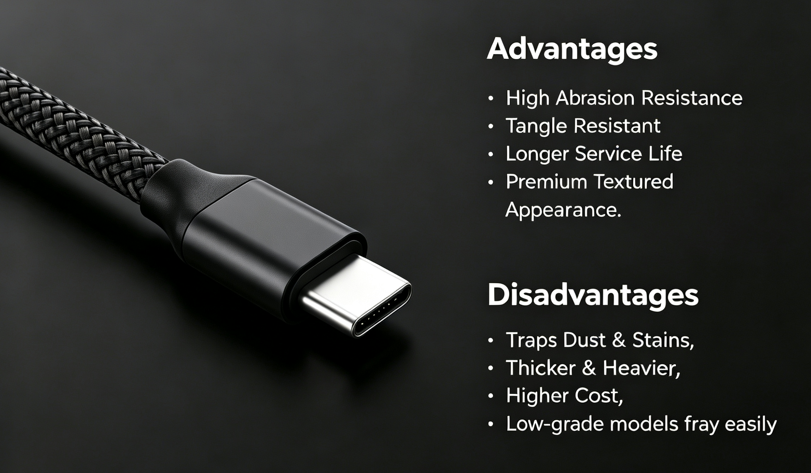
3.1 Superior Abrasion Resistance
Nylon fiber is naturally strong and wear-resistant. Combined with its woven mesh structure, it stands up well to desk friction, pocket scuffs, and in-car vibration. It resists peeling and cracking far better than smooth plastic cables, making it ideal for frequent plugging and unplugging.
3.2 Better Bend & Tug Durability
The braided outer layer distributes stress when the cable is bent or pulled, reducing strain on the inner jacket and slowing down wear at common failure points like the connector base.
Note: it reduces damage, but it does not make cables indestructible — rough handling will still cause harm over time.
3.3 Less Tangling
The textured braided surface changes the cable’s friction properties, so wires don’t stick together as easily. They stay neater when coiled up and are much less likely to turn into a knotted mess, making storage and daily use far more convenient.
3.4 Premium Aesthetics
Unlike plain, smooth plastic cables, nylon braided wires have a distinct, textured finish. They are available in solid colors, two-tone weaves, and gradient styles, giving them a more high-end look that works well with desk setups, car interiors, and everyday carry.
3.5 Longer Overall Lifespan
By shielding the inner jacket from scuffs, tears, and bending damage, a good nylon braided cable will typically outlast an equivalent PVC jacket cable under the same level of use.
4. Drawbacks of Nylon Braided Cables
4.1 Higher Cost
Nylon fiber costs more than basic plastic compounds, and the braiding process requires specialized equipment and extra production time. For the same internal specifications, nylon braided cables are almost always more expensive than PVC alternatives.
4.2 Prone to Dust Buildup
The tiny gaps in the woven structure trap dust and lint over time. After regular use, visible dust will collect in the braid, requiring occasional cleaning.
4.3 Stains Show Easily & Are Hard to Remove
Dirt and oil can sink into the braided gaps, and light-colored braided cables show stains very clearly. Once set in, deep stains are difficult to fully clean out.
4.4 Thicker & Heavier Build
The extra braided layer adds to the cable’s overall diameter and weight. Compared to slim PVC cables, they feel bulkier and take up slightly more space when stored.
4.5 Low-Quality Versions Fray Easily
Cheaper cables made with low-grade nylon fiber and loose braiding will develop fuzz, loose threads, and fraying after regular bending and rubbing. This is especially common with budget, no-name products.
5. Nylon Braided Cables vs. PVC Cables: A Side-by-Side Comparison
The table below breaks down the key differences between the two most common cable jacket types:
| Feature | Nylon Braided Cable | PVC Jacket Cable |
|---|---|---|
| Look & Feel | Textured woven finish, sturdy matte feel | Smooth glossy/satin surface, soft plastic feel |
| Abrasion Resistance | Excellent; resists scuffs, tears and peeling | Fair; scratches easily, cracks with frequent bending |
| Flexibility | Stiffer; flexibility decreases as braid density increases | Very soft and flexible, bends easily |
| Weight | Slightly heavier for the same gauge | Lighter and more compact |
| Ease of Cleaning | Harder; dirt gets trapped in gaps | Very easy; wipes clean with a cloth |
| Cost | Higher price point | Lower cost, great budget option |
| Storage | Resists tangling, but thicker bulk takes more space | Tangles very easily, but slim and lightweight |
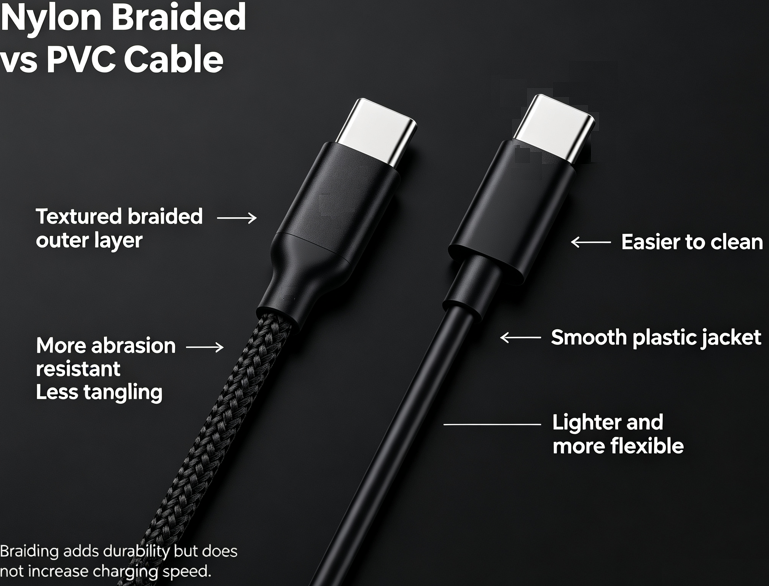
Neither type is universally better: braided cables excel at durability and style, while PVC cables win for convenience and value. The right choice depends on how you use the cable.
6. Does Nylon Braiding Affect Charging Speed or Data Transfer?
This is one of the most common questions about braided cables — and the answer is clear: nylon braiding has no direct effect on charging speed or data transfer performance.
6.1 It Does Not Change Charging Performance
Charging speed and maximum power support depend entirely on the internal conductor gauge (AWG), conductor material, and built-in protocol chips (such as E-Marker chips for high-power USB-C cables). Fast charging standards like USB PD and QC work based on internal components, not the outer jacket.
6.2 It Does Not Change Data Transfer Speed
Data transfer rates, video resolution, and audio quality are determined by internal wire construction, shielding design, and the connector’s official standard (e.g., USB 3.2, HDMI 2.1). The braided outer layer never touches the signal-carrying components, so it cannot interfere with speed.
6.3 Why Do People Think Braided Cables Are Faster?
The misconception comes from the fact that premium braided cables almost always include better internal components — thicker wires, proper shielding, and certified chips. The performance boost comes from those high-end internal parts, not the braided exterior. Many shoppers mistakenly attribute the improvement to the braiding itself.
7. Best Use Cases for Nylon Braided Cables
Thanks to their tough, wear-resistant design, nylon braided cables excel in these high-use, high-abrasion scenarios:
7.1 Smartphone Charging Cables
Perfect for daily carry in pockets or bags, where cables go through constant plugging, bending, and rubbing against other items.
7.2 Tablet & Home Device Cables
Great for household use where cables get frequently moved, stepped on, or plugged and unplugged throughout the day.
7.3 Laptop Charging Cables
Ideal for office desk setups with USB-C PD charging. They hold up to daily movement and look clean and professional on a workspace.
7.4 Gaming Device Cables
Well-suited for controller cables, handheld console chargers, and gaming desk wiring, where frequent tugging and bending is normal.
7.5 In-Car / Automotive Use
Car interiors involve constant vibration, friction, and summer heat. Nylon braided cables hold up better in these conditions than standard PVC wires.
7.6 Permanent Desk Cabling
For long-term monitor cables, Ethernet wires, and peripheral connections on a desk, braided cables stay looking neat and resist wear from occasional movement.
8. How to Spot a Good Quality Nylon Braided Cable
Quality varies wildly between brands. Use these simple checks to pick a reliable product:
8.1 Check the Braid Density
Good quality braiding looks uniform and tight, with no large gaps or loose threads sticking out. Low-quality braiding is sparse, messy, and pulls apart easily with light tugging.
8.2 Look at the Connector Strain Relief
The connector end is where most cables break. A good cable will have a long, flexible strain relief boot at the base of the plug to absorb bending stress. Cheap cables have little to no protection here and break quickly.
8.3 Inspect the Overall Finish
Well-made cables have clean, neat edges with no fraying, loose fibers, or jagged ends. Poor-quality products often have visible jump threads and rough, unfinished edges.
8.4 Verify the Internal Specifications
Don’t judge a cable by its cover alone. Always check the listed specs: conductor gauge (AWG, smaller number = thicker wire), maximum charging power, and data transfer speed rating. Make sure they match what you need.
8.5 Look for Trusted Certifications
Certifications are a basic sign of safety and compliance. Look for:
- USB-IF certification: For USB cables, confirms official specification compliance
- CE marking: Meets European Union safety standards
- FCC certification: Meets United States electromagnetic compatibility rules
- UKCA marking: Meets United Kingdom market access requirements
9. Care & Maintenance Tips for Nylon Braided Cables
9.1 Avoid Sharp Bends at the Connector
Even with braided protection, the joint where the wire meets the plug is still the weakest point. Always grip the plug itself when unplugging, and don’t yank or sharply bend the cable right at the connector.
9.2 Keep Them Dry & Avoid Extended Moisture
The braided gaps trap water, and long-term moisture exposure speeds up aging and can cause mildew. Wipe cables dry if they get wet, and don’t leave them in damp bathrooms or outdoors long-term.
9.3 Clean Them Regularly
For dust, use a soft-bristled brush to gently sweep along the braid pattern. For light stains, use a slightly damp (not soaking) cloth to dab the area. Never submerge braided cables in water — moisture can damage the internal wires.
9.4 Don’t Ignore Internal Damage
A perfect-looking outer braid doesn’t mean the inside wires are intact. If you notice intermittent charging, dropped data connections, or unusual heat from the cable, the internal conductors may be damaged. Replace the cable promptly to avoid safety risks.
10. Common Myths Debunked
10.1 Myth: All braided cables are more durable.
Fact: Not always.
Total lifespan depends on every part of the cable: conductor, connector, inner jacket, braid, and build quality. A cheap, poorly made nylon braided cable can break faster than a well-built PVC cable.
10.2 Myth: Braided cables automatically support fast charging.
Fact: Not at all.
Fast charging depends on internal wire gauge and chips (like E-Marker for high-power USB-C cables), not the outer jacket. There are plenty of braided cables on the market with thin internal wires that can’t handle fast charging.
10.3 Myth: Braided cables are always faster for data.
Fact: No, they aren’t.
Data speed comes from internal wire structure, shielding, and connector standards. Many budget braided cables only upgrade the exterior and use low-grade internal parts that can’t reach high transfer speeds.
10.4 Myth: Thicker braiding is always better.
Fact: It’s a tradeoff.
Extra-thick, super-dense braiding makes cables stiff, heavy, and harder to coil. For everyday use, a properly dense single-layer braid is the best balance of durability and feel.
11. Final Verdict: Are Nylon Braided Cables Worth It?
11.1 What They Actually Do Well
Nylon braiding is a jacket upgrade that improves durability, looks, and daily usability. Its real strengths are better abrasion resistance, less tangling, and a premium appearance — all of which extend the usable life of your cable.
It does not make your device charge faster or transfer data quicker. Performance always comes down to the cable’s internal components.
11.2 What They Don’t Do
To repeat: braided exteriors do not improve charging speed, data transfer rate, or electrical performance. Don’t pay a premium for a braided cable under the false belief that it will make your devices work faster.
11.3 Who Should (and Shouldn’t) Buy Them
- Choose nylon braided cables if: You use your cables heavily every day, carry them around with you, want a cable that will last a long time, or care about how your cables look on your desk or in your car.
- Stick with PVC or TPE cables if: You want the lightest, softest option, prefer easy-to-clean surfaces, only use cables occasionally, or are shopping on a tight budget. When shopping, always pick the internal specs you need first (charging power, data speed), then choose the jacket material that fits your daily use case — don’t buy based on looks alone.